Norwegian chess grandmaster Magnus Carlsen showcased his brilliance once again with a come-from-behind victory at the 2026 FIDE (Fédération Internationale des Échecs) Freestyle Chess World Championships on Sunday, Feb. 16. Carlsen defeated reigning U.S. Chess Champion and current world number two American grandmaster Fabiano Caruana in a thrilling, best-of-five series that saw him snatch victory from the jaws of defeat.
The format of freestyle chess is slightly different from other, more traditional versions. Unlike standard and blitz formats, where the difference lies in the speed at which players have to act, freestyle chess emphasizes improvisation and creative thinking as all back-row pieces start in randomized positions, eliminating any sort of preparation that players can make beforehand.
This year marked the first time that FIDE hosted an official freestyle world championship, although there have been other, similar style tournaments in the past. Notably, Carlsen attempted to win the FIDE Fischer Random World Championship back in 2019, but he came up short against American Wesley So in a loss that he said he was “deeply ashamed” of. Caruana finished fourth in the same tournament, losing to Carlsen in the quarterfinals.
This time around, Carlsen made certain that he would finish the job. Famous for flashing his temper when things don’t go his way at the table, Carlsen remained calm and collected all weekend, which he acknowledged as being crucial to his success.
“I am very happy with that part, that I managed to kind of psychologically reset and play for a win when I could,” he said, responding to a question about his ability to make Caruana pay for the mistakes that he made.
Theirs was a tightly contested match from the start, as Carlsen and Caruana, both unshakeable with their defence, drew the first game. The Norwegian escaped a loss in the second game by the skin of his teeth. A technical analysis of the game gave Caruana a +2.5 pawn advantage over the surrounded Carlsen at one point — quite the massive margin by professional chess standards — but he was able to eke out another draw nonetheless.
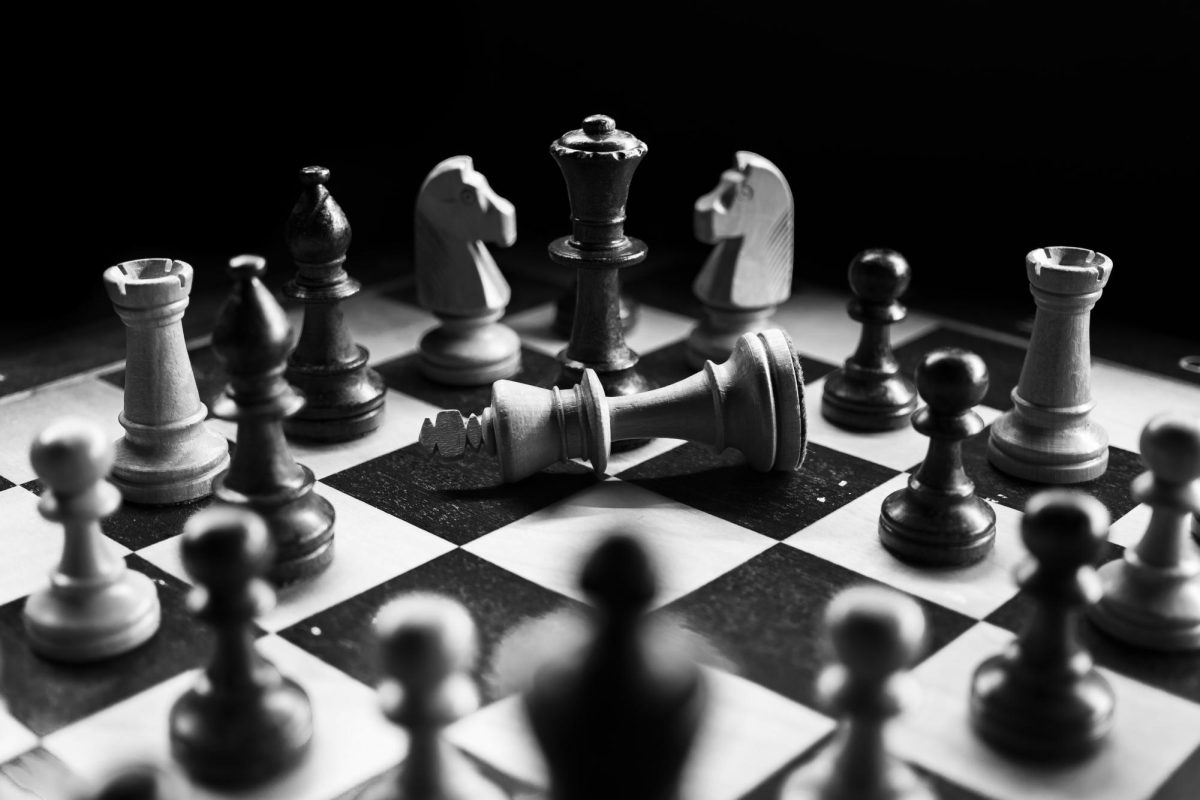
The third game was where the first blood was drawn. Carlsen found himself in a similar situation to the second game with his king surrounded by an aggressive attacking front from Caruana, and he made a massive and uncharacteristic blunder, moving his bishop out of a critical defensive position that left his king vulnerable to attack.
“This is one of the wildest blunders. We’ve seen some blunders based on deep calculations, but this is just a one-mover,” match commentator David Howell said, in disbelief of the move at the time.
But Caruana failed to capitalize, in part because the American found himself short on time. The missed chance added more weight to Caruana’s shoulders and opened the door for Carlsen to string together a perfect series of moves that saw him come back and win the game. Afterwards, Caruana lamented the fact that he couldn’t find a way to overcome the time and pressure burdens to come away with the win.
“[Game three was] easily won in many ways, there [were] very practical ways to do it, but I just didn’t choose any of them,” Caruana said.
Ever the shark and no stranger to impressive comebacks, Carlsen spoke about the importance of using the clock in psychologically breaking his opponent down the stretch.
“As soon as he gets very low on time, the quality of his play drops significantly, so at that point, I was hoping I might have a chance. I was kind of smelling blood, and I thought, ‘I’m not going to get a better chance than this one,’” Carlsen confidently said.
The fourth and final game of the match ended in a draw, but Caruana fought valiantly until the end, pushing Carlsen to his mental limit. At a critical juncture in the match, Carlsen made a move involving his queen that got him out of trouble and into the winner’s circle right at the margin of his concentration.
“It’s certainly not one of my more convincing wins today, but it feels great to be able to win on a bit of an off day. Most of all, I’m just happy to be done,” Carlsen said.
He came away with $100,000 — Caruana made $60,000. Although the American won’t be satisfied with another runner-up finish to his rival, he’ll be able to afford his plane ticket home and then some. Both Carlsen and Caruana have built up quite the nest egg when it comes to career earnings, netting somewhere in the ballpark of $12 million and $4.5 million, respectively.
In other major chess news, grandmaster Jan Timman, a former world number two and nine-time Dutch national champion, passed away on Wednesday, Feb. 18, at the age of 74. The wild-haired Timman is remembered for his “total chess” style of play that greatly advanced the sport’s boundaries as far as attacking strategy and positional play, along with an ironclad work ethic and a true passion for the game. Chess legends from around the globe sent in condolences, mourning the loss of one of the greats.