The first three races of the 2026 Formula 1 season have brought many changes to a typical race weekend as drivers and fans adjust to new regulations. As the checkered flag waved over Suzuka Circuit at the Japanese Grand Prix on March 29, F1 saw its youngest ever race winner in Kimi Antonelli, who is just 19 years old, secure his second victory in a row.
With the win, Antonelli surpassed his teammate, George Russell, for first place in the driver’s championship. The victory signaled a new chapter in the growing rivalry between Antonelli and Russell, as the Italian secured pole position by a margin of 0.298 seconds over his teammate in Japan.
In other news from the weekend, Haas driver Oliver Bearman had a massive crash at the Japanese Grand Prix. Bearman suffered an impact of 50G, and fans saw him limping away from his wrecked car. The crash raised concerns over the new regulations that came with the 2026 season, where drivers have had to make a massive adjustment with energy harvesting during laps.
Many drivers, like Carlos Sainz, have raised safety concerns.
“There’s no category in the world where you have this kind of closing speeds because that’s when big accidents can happen because it catches you by surprise, you defend late, it catches you or the car [behind],” Sainz said.
Bearman’s crash was caused by his high closing speed coming into a turn as he used the overtake button (which provided an extra boost in electrical energy to give his car more power) on Alpine Driver Franco Colapinto. However, as Bearman pushed to overtake, Colapinto’s car stopped supplying electrical power. Thus, not only did Bearman gain an extra 15 mph more than he normally would have heading into that corner, but Colapinto suddenly had less speed than he was expecting.
This combination meant Bearman was caught off guard by his closing speed on Colapinto heading into the turn. He reacted instinctively to avoid a collision, misplacing a wheel onto the grass, which sent his car violently spinning into the barriers at a speed of 191 mph.
Many drivers seemed to be almost expecting this kind of violent crash in their conversations with the media after the race. Bearman, who suffered no major injuries from the crash, seemed to be the victim of the new regulations, with drivers like Max Verstappen and Liam Lawson arguing that it proves drivers’ arguments for a change.
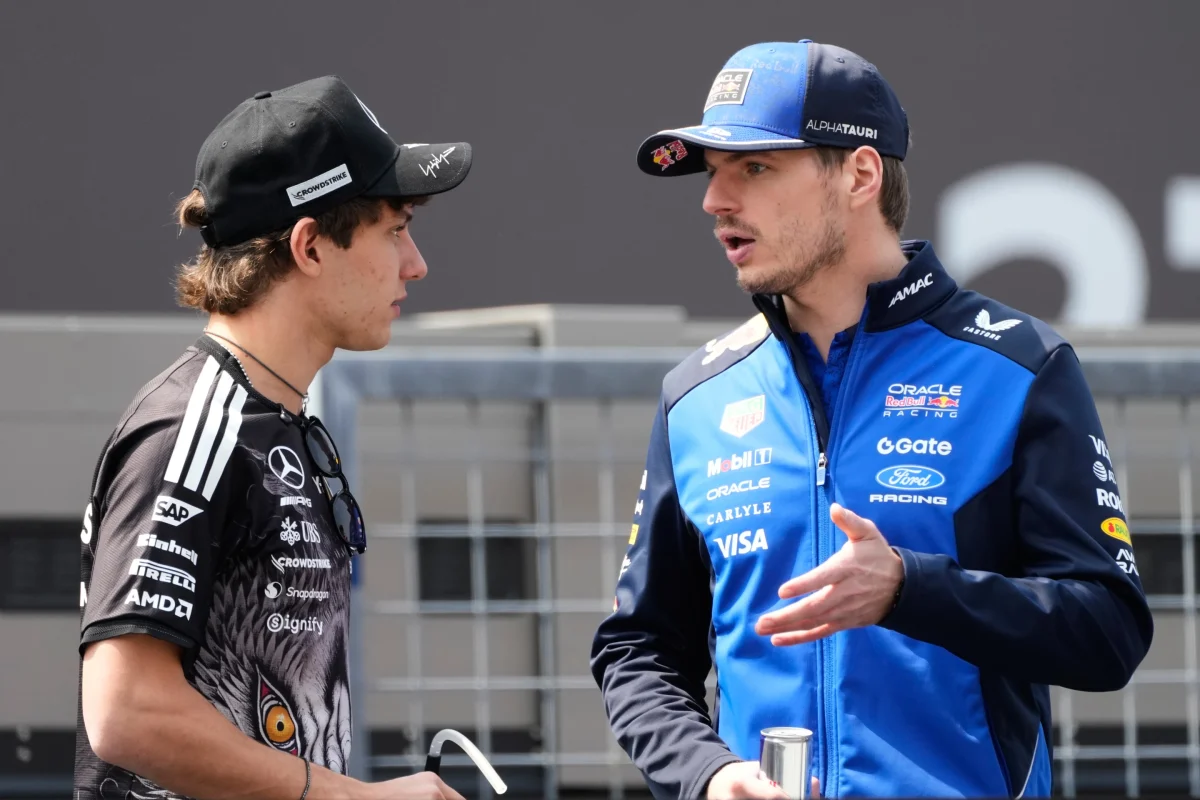
Four-time world champion and Red Bull driver Verstappen has continuously been unhappy with the regulations this year. After the Chinese Grand Prix on March 15, the outspoken Dutchman vocalized his complaints.
“It’s still terrible. I don’t know, if someone likes this, then you really don’t know what racing is about … Look at the racing. You are boosting past, then you run out of battery the next straight. They boost past you again,” Verstappen complained.
Meanwhile, seven-time world champion Lewis Hamilton praised the new cars and seemed enthusiastic about the season. The difference in attitude between the two may be a result of their respective cars’ performance. Verstappen has been outqualified twice by his teammate Isack Hadjar already, after only being beaten by his teammate once in qualifying last season altogether.
Regardless of Verstappen’s comparison to his teammates, Red Bull as a whole has had a slow start to the season. Engine troubles have marred the team’s start with their new engine partner, Ford, costing Verstappen and Hadjar during the races. The team is decidedly off the pace of the much quicker Mercedes and Ferrari.
While it is likely that Verstappen’s complaints may be magnified due to his car troubles this season, the new regulations should raise some concerns. While any “boring racing” will likely work itself out as teams and drivers get used to energy management, the sport’s governing body, the Fédération Internationale de l’Automobile (FIA), should be more open to criticism. Such a massive rule change was likely to have some flaws during the first few races, and it would have been unrealistic to expect everything to run perfectly with the start of the season. The FIA has not yet announced changes.
It’s worth noting that during the first two races, the governing body directed its attention to the race calendar — which had races scheduled in Saudi Arabia and Bahrain during April — and they made the decision to cancel the races due to conflict in the area. Thus, as the sport heads into an unexpected four-week break after just three races, the FIA will likely take this time to revise the regulations for the rest of the season.
Bearman’s crash certainly raised concerns, but many drivers seemed unsurprised and are now frustrated with the lack of action from the FIA. Had Bearman been driving on a smaller circuit, his crash could have been much more severe. He was protected by the huge runoff area of gravel, but had he gone straight into a barrier, his subsequent injuries could have been fatal.
Recently, Verstappen has suggested that he might leave F1. He participated in the endurance race at the Nürburgring Nordschleife earlier in March (placing first, although later disqualified), and he had previously suggested that he would like to try endurance racing after Formula 1.
An unhappy Verstappen has been the subject of many recent media pieces, with reporters pointing out his many qualms, not only with the new Red Bull car, but with the new regulations. If Verstappen were to leave due to rule changes, F1 would certainly suffer. The FIA has not announced any regulatory changes in response to safety concerns. The next race is scheduled for Miami in early May.