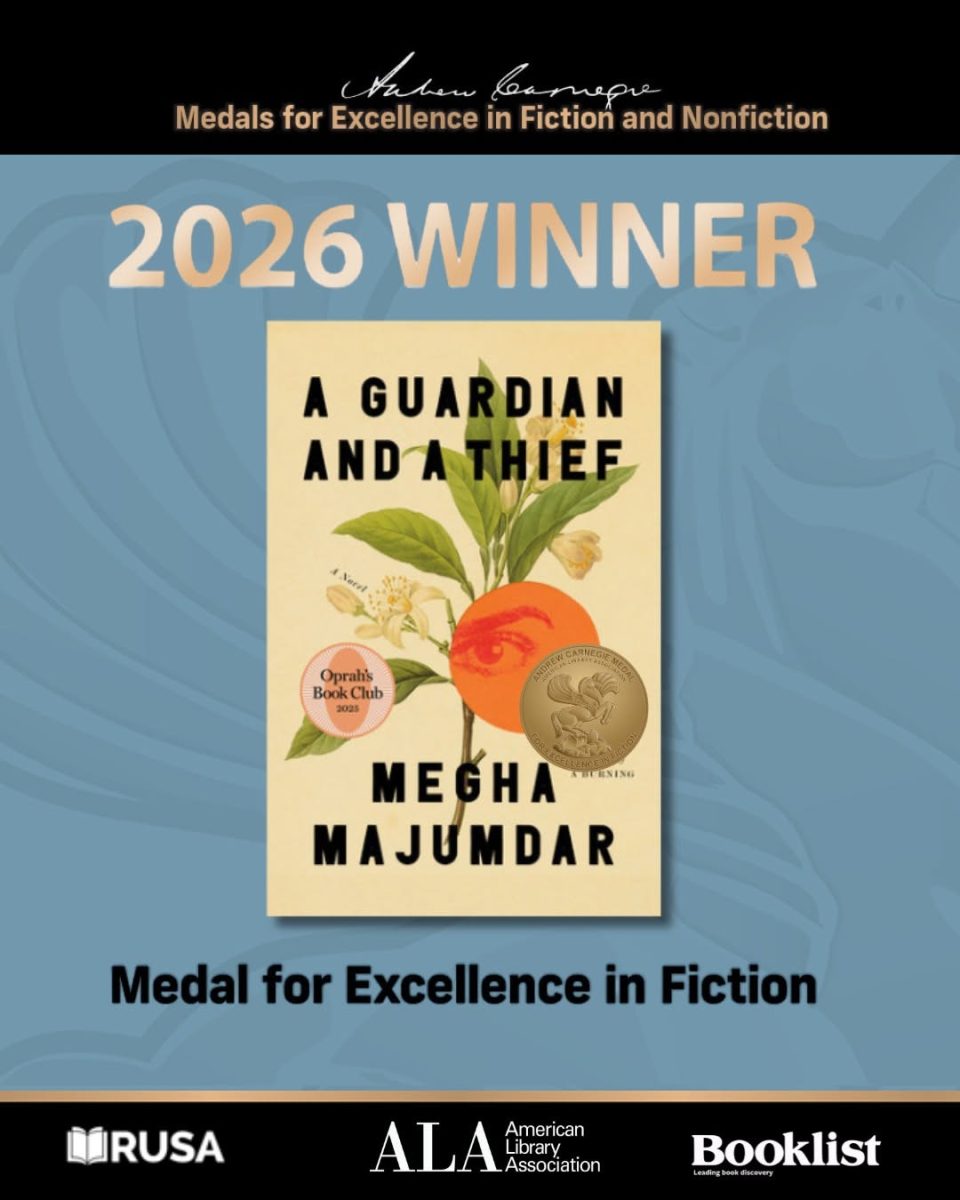
I first read “A Guardian and a Thief” by Megha Majumdar back in February for my Living Well in a Climate Dystopia core science class, co-taught by Associate Professor of English CJ Hauser and Associate Professor of Earth and Environmental Geosciences Joe Levy. A 2025 National Book Award Finalist for Fiction, this was my first climate-fiction (cli-fi) novel — a genre of literature that explores the impact of climate change on human society and the natural world. When I signed up for the course, I was drawn to the promise of reading this genre. I’ve only studied the impacts of climate change in a scientific context. But reading cli-fi is a compelling way to engage with this fundamental issue of the modern world.
“A Guardian and a Thief” is a critical examination of the lengths we will go for our loved ones and how the moral choices we make impact the people around us. It’s a propulsive 210-page cli-fi literary novel that reflects deeply on systemic injustices, moral dilemmas and the tension between hope and grief. It also makes cauliflower seem like a delicacy.
Majumdar’s novel is set in the near-future climate crisis of Kolkata, India. The story centers on two main characters: Ma with her daughter, Mishti, and her aging father, and Boomba, a resident at the homeless shelter that Ma runs. Ma and her daughter have been fortunate to have a house and a food supply. As the climate collapses and famine creeps in, they plan to emigrate to the U.S. to join Mishti’s father. But when their visas are stolen five days before their flight, Ma is stuck frantically searching for the thief while keeping hunger at bay. The novel unfolds over the course of one tense and urgent week with the characters facing life-or-death decisions. Boomba’s story runs parallel to Ma’s, as the choices they each make slowly intertwine their lives. A lower-class young man desperately trying to start a life and care for his family, Boomba is driven to commit escalating crimes that could allow him to survive another day. As their narratives unfold together, the reader is drawn to root for both of them.
Apart from the fast pace, edge-of-your-seat events, the way Majumdar masterfully writes her characters makes the novel all the more compelling. I particularly loved the main character, Ma. She is primarily driven by her love and devotion to protect her daughter, Mishti, and this single objective outshines everything else around her: “the needs of others were always smaller than the needs of one’s own child.”
When food rations grow short, Ma is pushed into the degrading act of stealing food from the homeless shelter where she works so that Mishti can eat. At the beginning of the novel, you think it is clear who the guardian is and who is the thief, but startlingly, these lines begin to blur. The two characters are put into a scrappy race for survival, with readers rooting for both of them. Yet we’re forced to grapple with the fact that only one can win, due to constrained resources and increasing tension, creating a wonderful and thought-provoking fiction.
The characters are morally complex but also understandable. Readers are forced to imagine themselves in this not-too-distant dystopian future. I think this is what a great cli-fi novel can do: allow readers to empathize with characters living through a climate disaster and to engage with the crisis on a human level rather than just through statistics. It makes climate change personal. This novel raises questions of what people will do to survive. What will parents risk for their children? Are some people’s lives more valuable than others?
Readers are not only empathizing with the characters in Kolkata, but also looking at their own futures. The desire to escape from these places is a real issue today. What “A Guardian and a Thief” does so well is that it dramatizes and illustrates this real struggle, as the characters’ environment is not a place they can survive. But there are restrictions on migration that keep them trapped, limiting their ability to move. It’s a terrifying thought that the place you call home will one day become a place no longer inhabitable. As immigration laws increasingly tighten, this struggle could become more of a reality.
Rating: 5/5