Picture your most formative memories of watching sports: the improbable comebacks, dominant victories and heart-wrenching defeats. Reflect on how your teams serve as a rallying point during challenging times. Moments like then-President George W. Bush throwing out the first pitch of the 2001 World Series or Red Sox fans wearing “Boston Strong” shirts after the 2012 Marathon bombings come to mind. Consider the community that your favorite teams foster and how they help you start a conversation with a total stranger, regardless of age, race or gender.
Now imagine all of this ripped away from you, as every single one of your teams is moved to a different city over the course of five agonizing years.
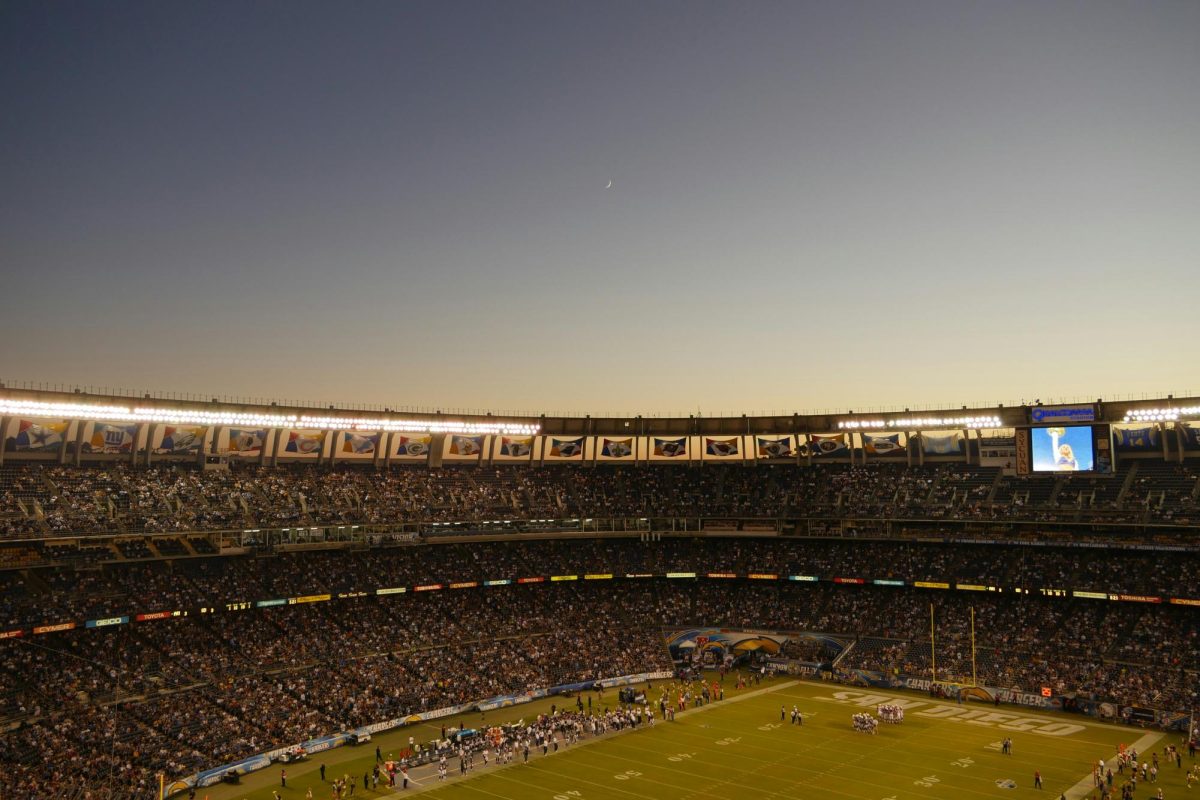
This nightmare scenario was the experience of Oakland sports fans, who, from 2020 to 2025, saw all three of their pro sports teams – the Warriors, Raiders and Athletics – leave the East Bay. The reason for their departure? The city of Oakland declined to use taxpayer money to finance multiple new billion-dollar stadiums. Following the City Council’s decision, ownership began searching for new destinations better suited to their financial demands, eventually settling on Las Vegas and San Francisco. The demise of Oakland’s pro sports is a unique but not unheard-of story that can be viewed as a symptom of a far larger problem: professional sports in 2026 are built for profit, not fans.
Beyond the constant threat of relocation, ticket prices have skyrocketed over the past 10 years. When new, billion-dollar stadiums are built using taxpayer funds, they feature fewer seats to artificially create scarcity. The at-home viewing experience is no better. An increasing number of teams have moved their broadcasts from free local channels to subscription services that lock fandom behind a paywall. The combined result? Either pay exorbitant fees or miss out on watching your favorite teams play.
These issues could be solved by a simple, common-sense solution: public ownership of professional sports teams. There are economic and practical reasons for teams to be publicly owned, both of which I hope to highlight. However, it’s first important to clarify what I mean by public ownership — it can be thought of as making fans, a community or the city itself the majority owners of a team. A team then becomes a public good, similar to a museum or a park, rather than a for-profit business. In all models of public ownership, teams are financially supported solely by willing fans rather than by all taxpayers in a metro area.
The main economic argument in favor of public ownership is that it puts control over team movement in the hands of fans. In effect, private ownership would no longer be able to strong-arm cities into supporting new stadium developments. Perhaps the most egregious example of this practice occurred in 2023, when the Oklahoma City government approved a plan to spend $850 million in taxpayer money to build a new arena for the OKC Thunder. This means that over the next decade, the people of Oklahoma City will be responsible for roughly 95% of the construction costs for a private business controlled by a multi-billion-dollar ownership group. Oklahoma already ranks near the bottom of the country in public funding for education and childcare, and caving to ownership’s demands will likely set the city even further back for years to come.
While some would be quick to blame the Oklahoma City government for this misallocation of funds, the alternative was to lose the city’s only major sports team. The Thunder ownership group had strongly hinted that, if the council failed to approve the plans for a new arena, they would begin the process of moving the team elsewhere. This case study from Oklahoma highlights the economic blackmail currently happening across the country. In the past year alone, as many as seven pro teams have entertained moving, citing conflict over stadium construction. However, under a public ownership model, the threat of uncontested relocation would be fully eliminated, and cities would be able to determine how funds are directed to other vital projects in education and healthcare, on top of professional sports.
Beyond the economic dimension, there is a practical argument for why teams should be publicly owned: publicly run teams are incentivized to actually win. A popular misconception about pro sports is that owners build winning teams because of the revenue that they generate. In reality, however, winning is costly. To compete at the highest level, teams must take on big contracts and invest heavily in scouting and analytics. Faced with this, many owners would rather coast on brand recognition and past success, assembling mediocre teams that barely compete to protect their bottom line. With public ownership, there is no bottom line to protect and teams can focus solely on winning.
The Chicago Bears and the Green Bay Packers are both great examples of these different incentives at work. The Bears are a privately owned team, controlled since their inception by a single family: the McCaskeys. The McCaskeys have historically been unwilling to spend the money on the stars, coaches and scouts needed to build a championship-level team. As a result, the Bears have maintained a below .500 record in the 21st century and only one Super Bowl appearance since 1985.
Contrast this with the performance of their most hated rival, the Green Bay Packers, the only publicly owned NFL team. As a consequence of their ownership structure, the Packers’ management values reinvesting in the team, long-term planning and on-field success over profit. They are widely regarded as one of the most consistently competitive and well-run teams in the NFL. While I don’t enjoy admitting it as a Bears fan, the Packers have outperformed Chicago despite having a far smaller market.
While the reality of public sports team ownership in the United States might still be a long way off, meaningful reform starts with admitting a problem exists. Some prominent figures today try to argue that sports aren’t, and should never be, political. I vehemently disagree. Professional sports are political because owners exploit local politics and their fans’ loyalties to turn a profit. Recognizing this fact, however, is the first step towards putting the game back in the hands of the fans.