


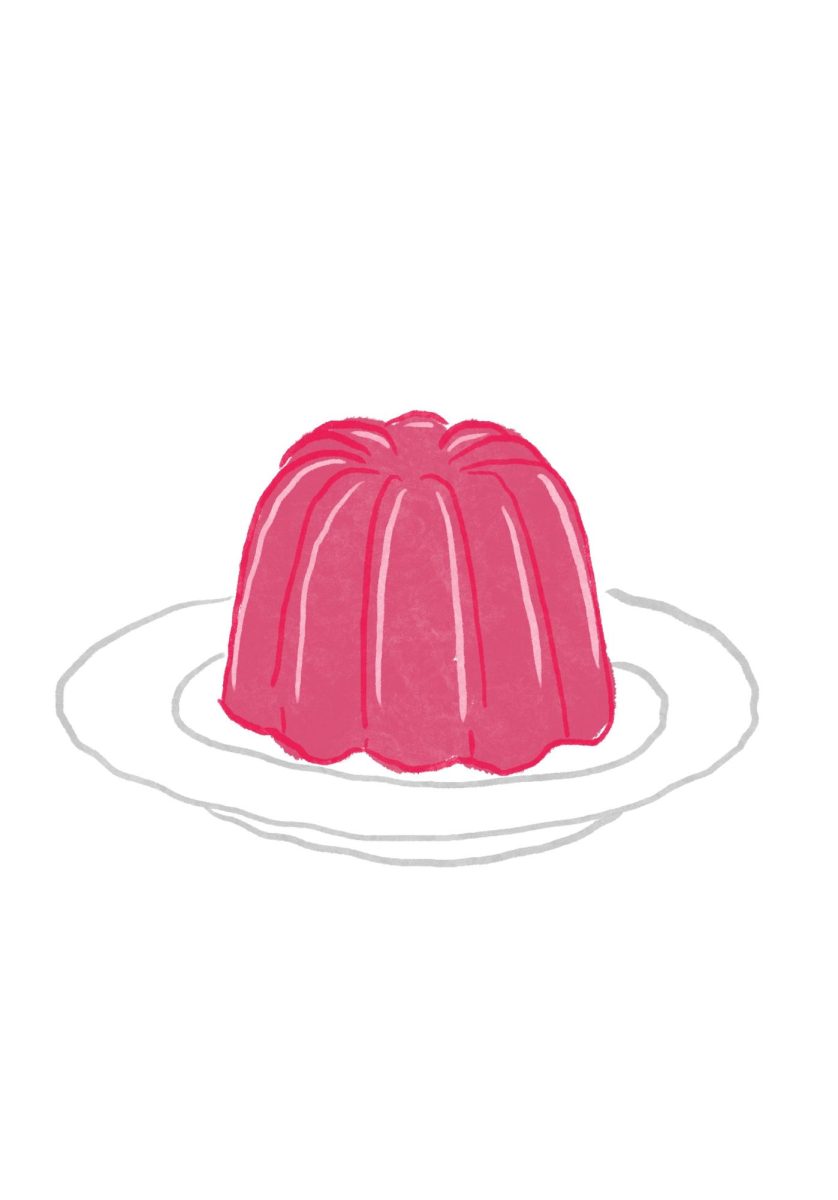
Picture this: you live in a post-apocalyptic world where trees are absent from the ecosystem, clean air is commodified and the human population all lives within a walled city. What is your sole source of sustenance in this synthetic hell? Jell-O. In Chris Renaud’s film adaptation of “The Lorax,” the residents of Thneedville only eat this gelatinous, colorful food. This choice reflects the artificiality of this society, devoid of all that is natural. This classic piece of Gen Z media clearly exposes the true nature of Jell-O and yet we have been conditioned by clever marketing and the nostalgia of our childhoods to view this unnatural entity as a fun treat.
To understand the prominence of Jell-O in the current culture, we must first look at its history. It rose to prominence around the Great Depression thanks to its ability to stretch limited ingredients and repurpose leftovers. In other words, it did not taste good and it was not healthy; instead, it was cheap. This, in turn, was the birth of the wretched Jell-O savory salad. An amalgamation of suspended cabbage, celery and carrots that your ancestors ate when their entire society was falling apart.
What’s even better, this reputation of Jell-O as a sort of emergency food has persisted into the current day. There’s a reason it’s the staple hospital dessert. When you are at your worst physically and mentally, have just undergone life-changing surgery and whatnot, you are presented with a cup of lime-flavored emptiness — a cup with little to no nutritional value but enough sugar and food dye to send any child under the age of five into a manic episode. Which is a concerning thought when you think about all the Jell-O your local emergency room is handing out.
However, we must remember the “life-saver” that is “Zero Sugar” Jell-O. While primarily marketed to diabetics, it is also bought by parents everywhere in an effort to satisfy the needs of their toddlers without them running around the house for hours on end. This form of Jell-O indeed lacks traditional sucrose; instead, it is replaced by its much more evil twin, maltodextrin. For those of you who don’t know, this is a carbohydrate that somehow has a higher glycemic index than the sugar found in traditional Jell-O. Better yet, it is known to cause rapid blood sugar spikes, making it incredibly risky for people with diabetes. Therefore, besides fueling my hatred for Jell-O, the existence of this low-sugar alternative marketed directly to diabetics is a complete lie that should probably be put under investigation by the FDA.
To continue investigating the makeup of Jell-O, I will focus on gelatin, which is often derived from collagen found in pigs. This renders the product both non-kosher and non-halal. The industry is essentially excluding entire religious and cultural groups, just to market a snack made from animal scraps.
The primary defense for Jell-O is that it is visually appealing, which, in my opinion, is a lie we’ve been telling ourselves since the 1950s. A second defense I’ve heard is simply the “fact” that it is tasty. To counter both of these arguments, I present to you the British jellied eel. If I’m being honest, I have never tried this dish before. However, I am willing to go out on a limb and suggest that it might not taste the best. Green Jell-O Salad, on the other hand, I have had the privilege to experience. This dish is of Midwestern origin and the recipe varies from family to family, but it typically includes Lime Jell-O, cottage cheese, lemon-lime soda, canned pineapple, walnuts, Cool Whip and shredded cheddar cheese. As I’m sure you can imagine, this concoction is the definition of visually unappealing and absolutely repulsive. You first get hit by a wave of intense, artificial lime flavor, then all of a sudden it turns sour and savory as you get a chunk of cheese. All the while, the textural experience going on in your mouth is akin to regurgitated food baby birds receive from their mothers.
For all of these reasons, and likely many more, I hold the unpopular opinion that Jell-O should’ve faded out of our diets decades ago. It had its moment when it helped people survive the 1930s. It gave us something to do with leftover eel in London. But with modern technologies, we have moved past the need for gelatin dishes. It’s time to wean off the nutritional vacuum that is Jell-O and move on to bigger and better snacks. Preferably, ones that don’t jiggle at the slightest disturbance.



Jello Enthusiast • Apr 13, 2026 at 11:02 pm
High cortisol article