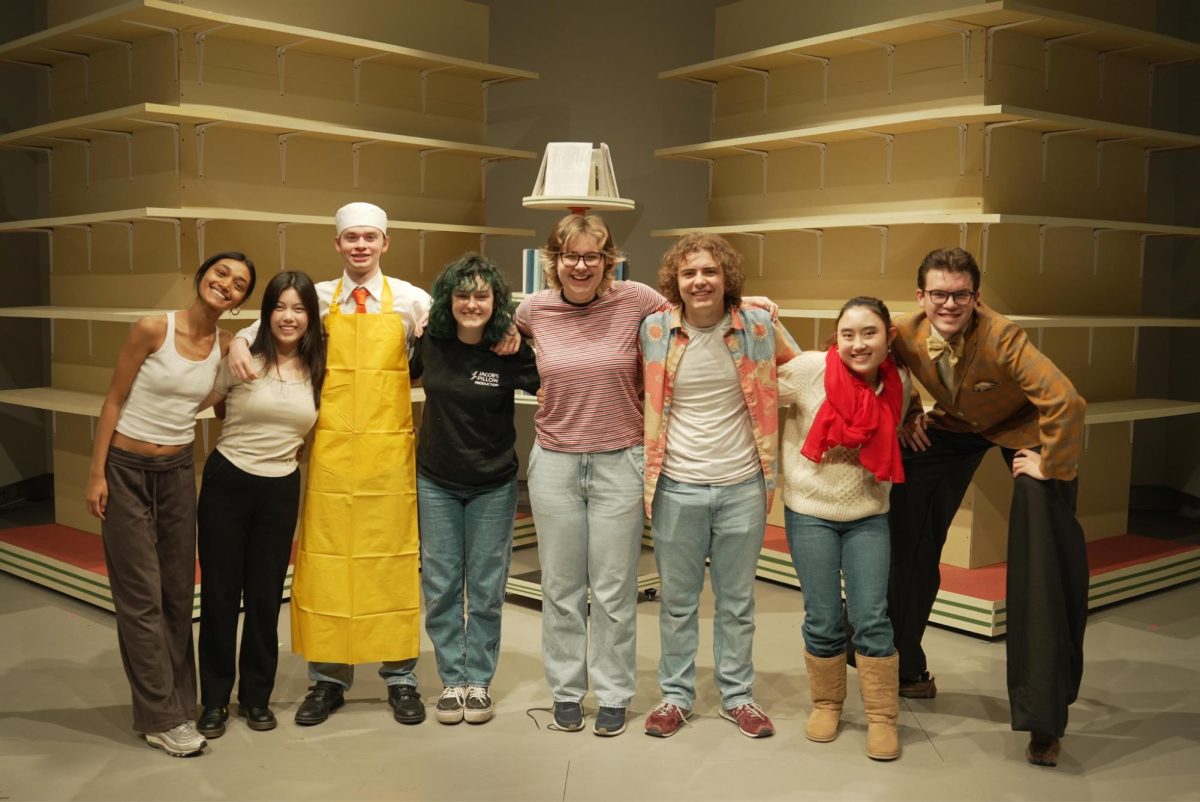
Colgate University’s Center for Women’s Studies, in collaboration with the Haven Sexual Violence Resource Center, hosted a period literacy panel for their weekly Brown Bag series on Tuesday, Sept. 16, in East Hall.
The panel was facilitated by senior Haven Ambassador and Outreach Intern Endré Cattouse and junior Women’s Gender and Sexuality Studies (WGSS) Intern Rowin Smith, and aimed to normalize conversations around menstruation.
The panelists – senior WGSS Intern DaQuan Hurt; sophomore Haven Ambassador Carmen Reed; senior Shaw Wellness Institute Ambassador Sammy Perez; Assistant Professor of LGBTQ Studies Lindsay Toman; and Professor of Global Public and Environmental Health Rebecca Upton – discussed the experience of menstruation, societal stigmas and access to menstrual products and hormonal care on campus.
Toman described the education disparity of period literacy in the American school system, recalling a middle school physical education class where she and her female classmates were separated from their male peers to be taught about menstruation.
“Even cis-girls and cis-women aren’t given the full education on what a period is,” Toman said. “We’re just kind of taught how to take care of it – we’re not really taught about what it is and what it means.”
Perez echoed these thoughts by sharing her period education growing up in a conservative area.
“I had the period talk, but they mainly just talked about abstinence, talked about, you know, how to conceal it, and there was a lot of shame surrounding that,” Perez said. “They didn’t even talk about how to use a tampon, a pad or a menstrual cup. I didn’t even know that was a thing.”
The panelists emphasized the importance of dismantling the stigma around menstruation for all.
“It’s so important to break this down and make menstruation normative so that you can then start to have these other conversations,” Hurt said. “Just because something is called birth control doesn’t mean it’s not still a medicine that helps a bunch of other [symptoms] – but you wouldn’t know that because you police menstruation with all of these ideas of [judging someone] for what they’re doing with their body.”
The discussion then shifted to the resources Colgate provides for students. Toman asked if menstrual products were available in every restroom on campus, to which the crowd answered a resounding no.
“That’s a problem, right? Colgate, with the amount of funding we have here, there should be tampons and pads in every bathroom. Women, men, gender neutral bathrooms, all of them,” she said.
Perez emphasized that Colgate does, however, offer a birth control pill option covered by student health insurance.
In the discussions around transgender student health, birth control options and the effects of hormone therapy, Smith, also the president of the Trans Advocacy Group on campus, was pleased with the variety of perspectives the panel included.
“I was really happy with the depth to which the panelists responded to the questions I delivered as a facilitator. I think it’s important to remind people that women aren’t the only people who menstruate,” Smith said.
Toman underscored the importance, especially for trans youth, to put one’s individual health as a top priority.
“It’s extremely important to advocate for yourselves. Be an informed patient, go to your doctor if you have questions, especially if you don’t feel right about something,” Toman said. “Start the conversation, and be confident in it. If there’s anyone you should be comfortable with, it should be your healthcare provider … advocate, advocate, advocate!”
Reed reflected on their experience speaking on the panel.
“I’ve been involved with Haven since spring 2025. I love it because of the people; we all truly care about each other’s well-being, and we’re able to have insightful and wonderful conversations — and foster them at events like these!” they said. “We cultivated a great, supportive conversation. I really appreciated how every member of the panel, despite some of us meeting for the first time that day, listened to and provided support to the person speaking. Even though we all experience periods differently, we connected through our shared experiences and ideas for the future.”
Upton shared how speaking on the panel was a positive learning experience.
“It was a great panel, and I felt super honored to be in such good company all around,” she said. “I was reminded that period literacy is something that stretches across the life course and that everyone, menstruators and non-menstruators alike, all of us share some experience of periods – we ‘learn’ about periods in different ways, and all of us can do better when it comes to lessening stigma. We should and need to keep talking about periods.”
The next installment of the Brown Bag Series will take place on Tuesday, Sept. 23, at 11:30 a.m., welcoming Professor of English at SUNY Cortland and Fellow at the Society for the Humanities at Cornell University, Teagan Bradway, for her talk, “Bodies that Gather: How to Practice and Sustain Queer Kinship.”