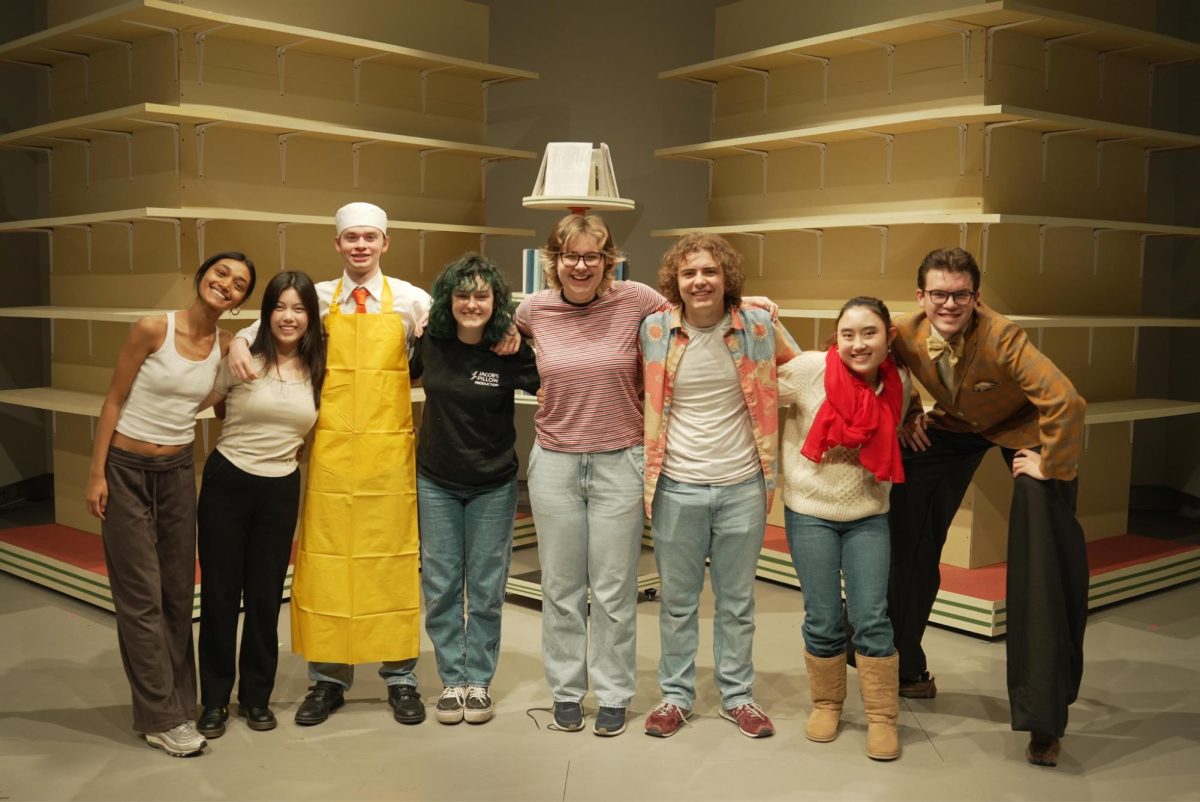
Colgate University Museums invited multidisciplinary artist Antonius-Tín Bui to lead a collaborative workshop, “Objects of Meaning: A Collective Altar of Story and Performance,” on Thursday, Nov. 13. The workshop, held in the EEP Vault in Bernstein Hall, asked attendees to bring something of personal value, whether that be an object or a memory.
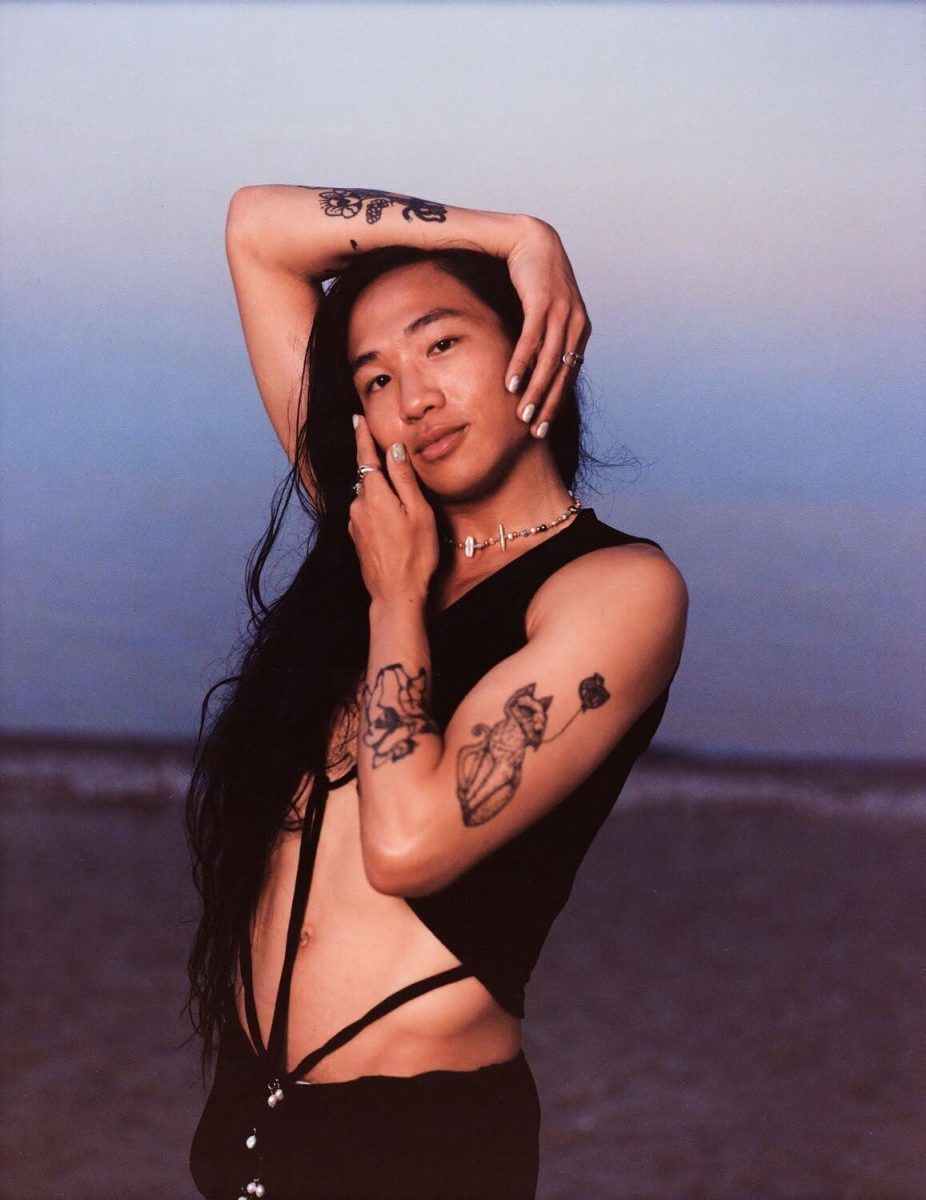
Bui identifies as queer, gender-fluid and Vietnamese American. Their work covers the realms of hand-cut paper, community engagement, performance and soft sculpture. They use pencil, ink and paint to create intricate pieces that capture the heart and soul. Bui elaborated on their affinity for paper.
“All of us have a very intimate relationship with paper once we begin to reflect on our birth certificates or toilet paper,” Bui said.
Bui’s latest project explores ancestral burning paper.
“Whatever you burn, you provide for the afterlife,” Bui said. “Now, you can find ancestral burning paper in the forms of Teslas and mansions. Basically, capitalism is perpetuated in the afterlife. My interest is in what objects we each consider important – what we want to hold on to and pass on to future generations.”
Nicholas West, co-director of University Museums and curator of the Picker Art Gallery, first met Bui during their fellowship at the Golden Artist Colors residency. Stunned by Bui’s skills, West invited them to display their work at Colgate’s Picker Art Gallery. Bui’s pieces are currently part of the Picker exhibition “X: Gender, Identity, Presence,” along with many works by other LGBTQ+ artists.
“The exquisite cut-paper portraits by Antonius-Tín Bui (they/them) are intimate exercises in really seeing trans and queer individuals as they wish to be seen,” the wall of the exhibition reads.
“X: Gender, Identity, Presence” aims to counter the recent political erasure of the transgender community in the United States with tenacity, vulnerability and unapologetic expression.
“As we were thinking about the theme for this exhibition and how we wanted to center the voices of trans, nonbinary and genderqueer artists, Antonius immediately came to mind,” West said. “[They are] both an artist that we would love to show here and also a really good collaborator for thinking through the exhibition and [engaging] with the students here.”
Bui’s respect for students was evident in the way they addressed attendees throughout the workshop.
“I actively try to engage with each of you as emerging professionals, not just students,” Bui said. “Each of you has such innovative ideas. [You have] the audacity to chase them. If anything, adults should listen to students, kids and youth more.”
Bui’s workshop drew both Colgate students and staff. All the attendees sat together in an intimate circle in the calm white space of the Vault. Off to the side, a makeshift altar wrapped in fuchsia and iridescent sashes stood, surrounded by artificial flowers and candles.
Bui began the workshop with a prayer and asked participants to share a blessing. They then asked the attendees to break into small groups and discuss their relationship with altars and rituals. Some people took the opportunity to define their relationship with religion, while others explained their relationship with secular routines. Participants also completed fill-in-the-blank worksheets about the object or memory they chose to bring.
The attendees eventually rejoined the circle to read their worksheets aloud, evoking a range of emotions and reactions, including laughter, tears and nostalgia. Bui spoke first, describing the significance of their hairbrush, which has the letter “A” engraved on the back and was a gift from their partner.
In an earlier interview, Bui shared how the brush represented their experience with the autoimmune disease alopecia areata in 2017.
“[My hair] was down to my chest at that point,” Bui said. “And so that was a time [when] I was finally starting to feel like I was expressing the gender that I knew. And then [I] lost all my hair. But what’s really complicated about my hair is I think it makes my mom and many other people uncomfortable … It feels deeply personal, political, just entangled.”
Attendee and senior Oscar Brown appreciated Bui’s vulnerability.
“Knowing I was in a safe space to share my own grief was so important, and doing this in an environment where others both shared grief and joy felt healing,” Brown said.
The workshop continued with a series of sound and movement exercises, ending with Bui’s reading of two poems: “Perhaps the World Ends Here” by Joy Harjo and “The Blue Dress” by Saeed Jones.
Bui named some of their pieces in poetic form to convey their love for poetry. One of Bui’s portraits – named after lines from Ocean Vuong’s poem “Reasons for Staying” – can be viewed in the Picker Art Gallery along with two other pieces. The three works will remain on display until Sunday, Dec. 14.
Although Bui’s works will eventually leave the Colgate campus, Brown suggests Bui’s impact on Colgate students and staff will last.
“I left the workshop feeling reminded of the care and compassion we all have for one another, regardless of how close we were at the beginning of the workshop,” Brown said. “That – more than anything else – is what we as a Colgate community should always be striving for.”