EchoScape, an innovative meditative video game experience utilizing audiovisual technology and mindfulness techniques, celebrated its opening with Colgate University students, faculty and members of the Hamilton community on Monday, Feb. 2. The opening reception featured light refreshments and invited participants to discuss their personal relationships with meditation and sensory stimuli before exploring the immersive space. Following their time in the space, attendees gathered to reflect on their experiences.
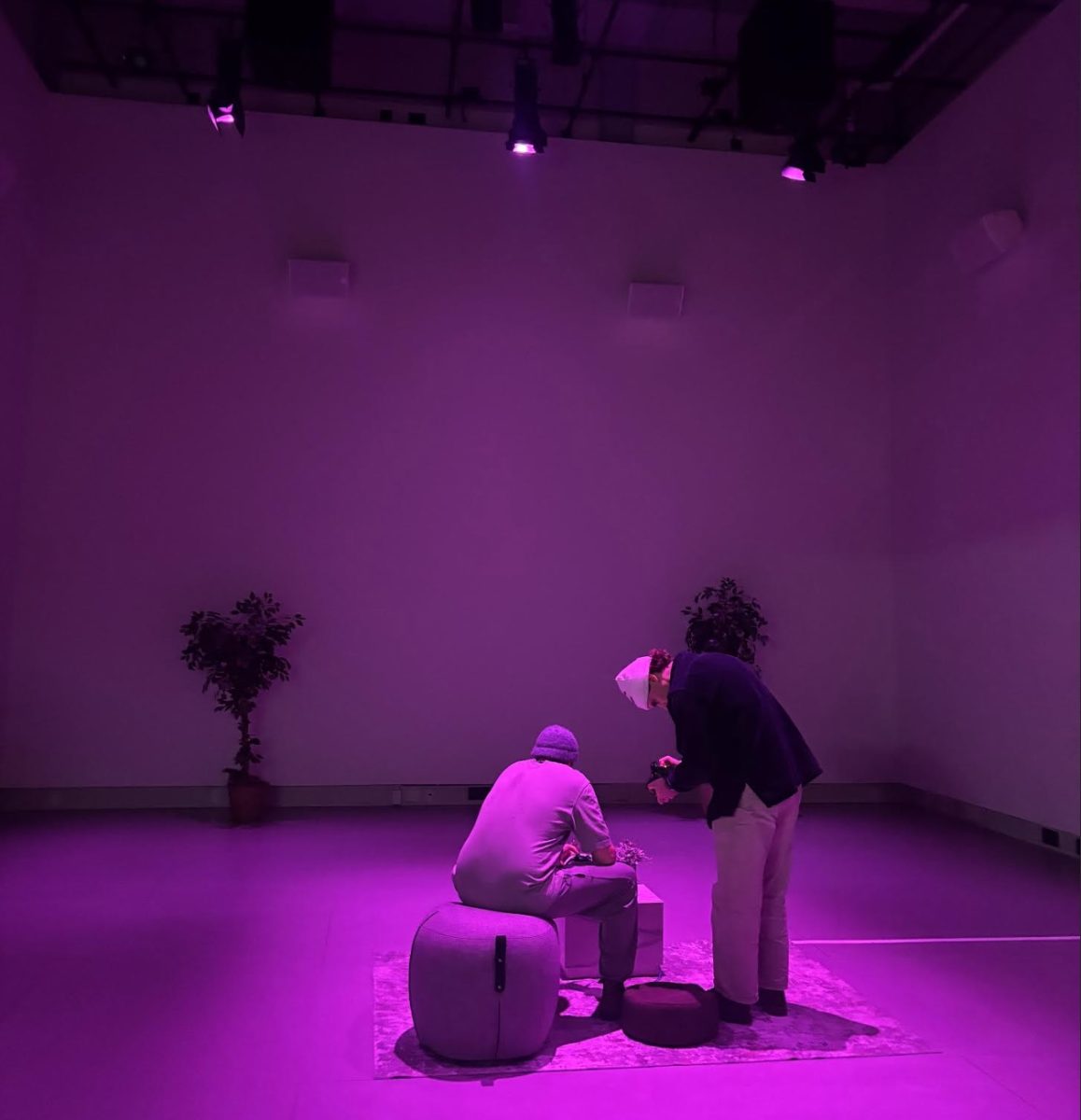
EchoScape transformed The Vault in Bernstein Hall into a fully immersive audio-visual mindfulness space. Participants used a video game controller to adjust sound and lighting gradients, choosing between a calmer, meditative environment and active stimuli to support productive, individualized meditative experiences. Experimenting with various settings allowed individuals to practice meditation and determine which style is most personally beneficial.
Michael Ahearn Wilcox, a sound engineer and classroom and events manager at Colgate, developed EchoScape through Colgate’s Office of Entrepreneurship and Innovation. Wilcox explained that EchoScape emerged from his own struggles with anxiety. While classic passive meditation styles such as mindfulness and Tai Chi work for many people, Wilcox found that they never provided relief during moments of heightened emotion.
“My goal with this project is to make meditation a more positive and controlled experience,” Wilcox said. “There is a difference between passive and more stimulating meditation, and this space is a new adaptation of both types controlled by the individual person.”
Wilcox’s extensive background in music, video games and audiovisual engineering heavily influenced EchoScape’s development. He previously performed live sound engineering on stage using only a video game controller. By combining his passion for music with anxiety-reducing techniques and sound manipulation skills, Wilcox created the project’s initial prototype.
Upon earning his MFA from Syracuse University, Wilcox began experimenting with a user-controlled electronic mediation system as a way to manage his anxiety more productively. When he realized others faced similarly complex relationships with meditation, the project evolved. The concept evolved from a pair of headphones and a PlayStation controller to a physical space designed for individual exploration and learning.
The interactive visual and auditory elements of EchoScape combat challenges that some people face with traditional mind-clearing meditation strategies. For individuals with particularly ‘loud thoughts,’ these approaches can sometimes increase anxiety rather than encourage relaxation. By incorporating visualizable, individually controlled stimuli, the transformative space places the participant in a separate physical space while allowing them to experiment with their ideal experience. This dynamic hopes to strike a balance between immersion and control, enabling participants to identify which mindful space best serves them.
Junior participant Teagan Clark said the space’s interactive design made meditation feel more approachable.
“I usually struggle with sitting still during meditation because my mind feels too active,” Clark said. “Being able to adjust the sound and visuals gave me something to focus on without feeling overwhelmed. It felt more like working with my thoughts instead of trying to shut them off.”
EchoScape’s variability not only helps participants manage anxiety but also encourages them to embrace more stress-inducing stimuli. Wilcox explained that exposure to uncomfortable stimuli is a key tool to alleviating anxiety and working on how to battle it. Exploration and immersion in simultaneous stress-alleviating and stress-producing stimuli are key to integrating passive and active meditation in a single space.
Village attendee Leah Feder noted that physically controlling the auditory and visual elements of the experience altered her perception of mindfulness.
“When you have control of how you experience the meditation, how much are you actually yielding? It’s interesting to think about,” Feder said.
EchoScape’s opening reception also served as a project documentation, welcoming a film and photography team to capture the exhibit and initial participant reactions. Following the exhibit’s three-day residency in Bernstein Hall, Wilcox hopes to share the short film with additional venues and creative incubation spaces within the engineering and mental health industries.
Wilcox is currently working with Colgate’s Thought Into Action team to develop EchoScape into a distributable video game. By translating the immersive physical space into a digital format, Wilcox aims to make innovative, customizable meditation strategies more accessible and widespread.