Despite geographic proximity and historical ties to the United States, Latin American democracies face fundamentally different challenges in governance and institutional development. A new bloc of right-wing, populist governments has begun to arise throughout Latin America. At the movement’s core is exhaustion, not ideological rifts between the traditional left-wing and right-wing spectrum. Many populist leaders believe that current domestic institutions are an obstacle to rapid and substantial progress. After years of corruption, these leaders utilize distrust as the center of their movements. It may initially seem that this regional change will provide the current American administration with greater policy alignment through potential security initiatives, immigration policy cooperation and openness to American business. However, it may come at the cost of the U.S. exceptionalist crusade to export democracy, often used to justify involvement abroad.
Conservatives in Washington believe that this shift might mean leaders are more U.S.-aligned. Latin American leaders have previously agreed with the United States’ position on immigration. By opening the doors to U.S. political and economic influence in these regions, America’s bid towards greater hemispheric dominance will be bolstered. The efforts of Latin American leaders to build up their countries will face harsh economic realities and actually weaken U.S. influence as a result. Honduras and El Salvador, both run by pro-Trump leaders, continue to engage in the Belt and Road Initiative with China, despite the United States’ strategic goals to minimize China’s influence in Latin America. As U.S. policy towards the region continues to change, these leaders will likely simply shift onto the next thing that will bolster their countries’ economic development.
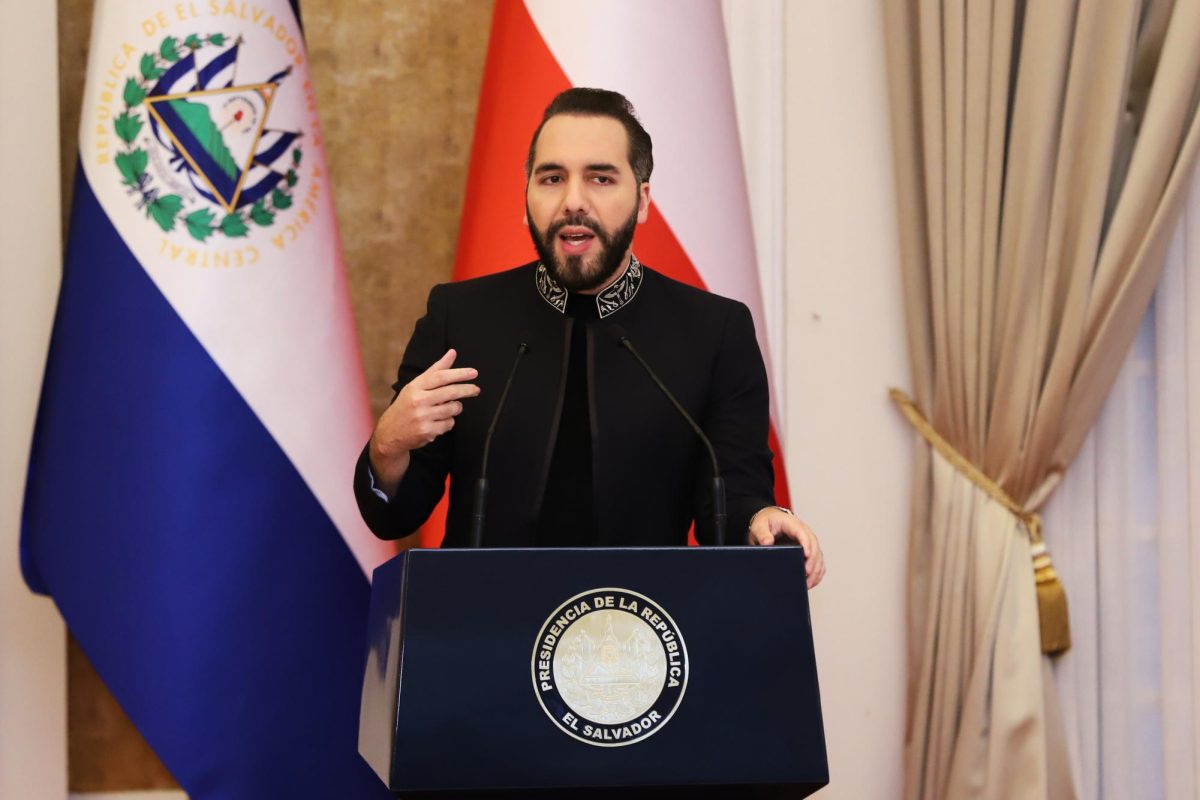
Nayib Bukele, the hugely popular leader of El Salvador, is a shining example of Latin America’s conservative shift. His high approval ratings owe mostly to the fact that he has taken El Salvador from being the former “murder capital of the world” to a relatively safe country. This development is improving the country’s institutional capacity and allows businesses to operate safely. Many Latin Americans view this change favorably, and many choose to ignore the fact that Bukele has abolished term limits and ensured law enforcement’s loyalty to him, often using the police for intimidation tactics. Furthermore, through his extremely well-greased media machine, he constantly pushes the image of a modern, pro-business, strongman leader who is his country’s saving grace.
On Feb. 5, Bukele attended the National Prayer Breakfast in Washington, D.C. Trump spoke highly of Bukele, but criticized his stance on immigration: “He sends bad people to the United States, and I’m going to talk to him after this. But I love him. He’s done a great job … some of you have seen, he operates rather large prisons, like prisons [that are] so large you can’t see from one side to the other.” Bukele has accepted millions in U.S. funds and agreed to hold American deportees — many of whom are non-Salvadoran — in huge prisons that he built in his ongoing fight against organized crime in El Salvador. Bukele has defended his “mano dura” policies, which are often accused of being human rights abuses, by stating that he is simply defending the rights of the regular citizen. While he has made El Salvador safer, it has come at the cost of the significant consolidation of presidential power, backed by military authority. This risks the cementation of an aggressive militant regime in El Salvador, a curse that has contributed to development issues in Latin America for decades.
The recently re-elected president of Argentina, Javier Milei, has promised to renew Argentina’s economy through extreme economic “shock therapy” reforms, all while attacking political and social institutions. Bukele and Milei have shown a desire to get closer to Trump. In late 2025, Argentina and the United States agreed to a $20 billion currency stabilization bailout, which Argentina repaid in early January. Trump’s initial tariffs led Milei to implement reforms in an attempt to appease Trump. Milei also pushes for isolationism, often indicating he wants to remove Argentina from South American trade organizations such as Mercosur, in exchange for a U.S. trade deal.
Costa Rica’s newly elected president, Laura Fernandez, was congratulated by U.S. Secretary of State Marco Rubio in a press statement: “Under her leadership, we are confident Costa Rica will continue to advance shared priorities to include combatting narco-trafficking, ending illegal immigration to the United States, promoting cybersecurity and secure telecommunications, and strengthening economic ties.”
On the surface, these leaders and their willingness to support the current American administration seem to bolster the rocky relationship between Latin America and the U.S., which is historically seen by many as imperialistic. However, the desire of these leaders is to progress their countries economically, without regard to institutional quality or democratic reinforcement. Alignment with U.S. policy and increases in cooperation are often presented by Washington as a counterweight to China’s growing influence in the region. As American administrations come and go, these leaders will push economically expedient policies; ultimately, their ambitions are not rooted in a fundamental desire to align with American liberal values.