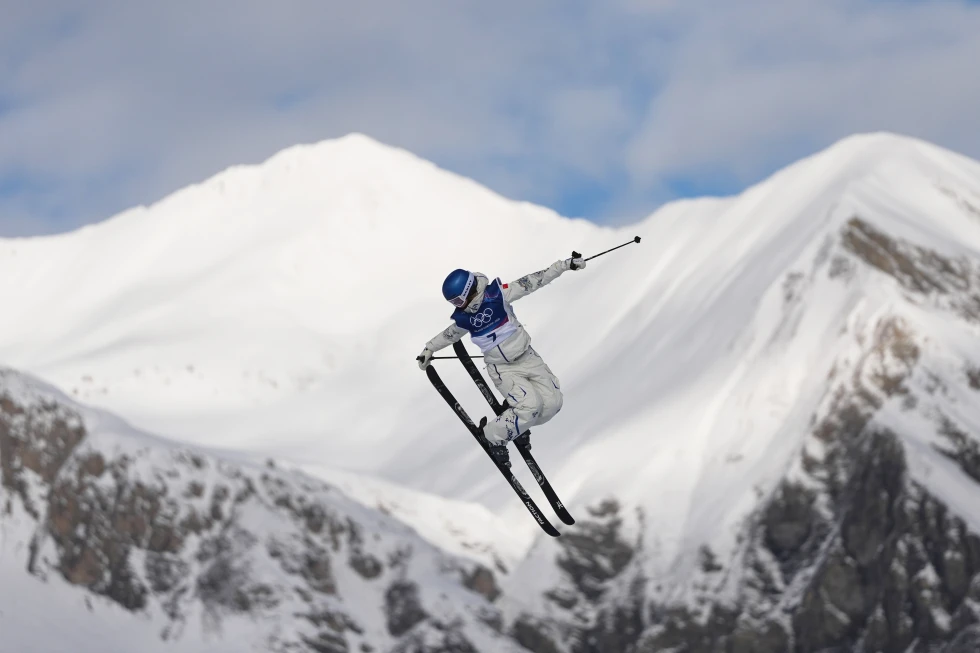
The first week of the 2026 Winter Olympics in Italy has already delivered defining elements of any memorable Games: razor-thin finishes, historic performances and stunning setbacks. Across events on snow and ice, athletes have experienced both career-defining triumphs and devastating disappointments, highlighting the volatility that makes Olympic competition so compelling.
One of the most closely watched storylines unfolded in ice dance, where Madison Chock and Evan Bates secured silver for the United States. The medal marked the first Olympic podium finish for the veteran duo, who have skated together for 15 years and married in 2024. Entering the competition as strong medal contenders, Chock and Bates delivered a polished free dance performance set to “Paint It Black,” by the Rolling Stones, earning a score of 134.67.
Despite their strong showing, the Americans were narrowly defeated by France’s Laurence Fournier Beaudry and Guillaume Cizeron. The French pair scored 135.64 in the free dance, claiming gold by just 0.94 points. The slim margin immediately sparked discussion, particularly given the contrasting experience levels between the teams. While Chock and Bates have spent more than a decade refining their partnership, Beaudry and Cizeron have skated together for less than a year.
The result also renewed attention surrounding Guillaume Cizeron, who previously won Olympic gold in 2022 alongside Gabriella Papadakis. Papadakis later accused Cizeron of controlling and abusive behavior — allegations he has strongly denied. The controversy added another layer of intrigue to an already tense competition, highlighting how narrative and perception often intersect with performance in judged sports.
While figure skating provided drama on the ice, alpine skiing delivered a stark reminder of the degree of physical exertion that the athletes put themselves through. Lindsey Vonn’s Olympic campaign took a devastating turn when she crashed less than 15 seconds into her downhill run after clipping a pole. Vonn was heard screaming in pain before being airlifted off the course, underscoring the severity of the incident. Medical evaluations later revealed a complex tibia fracture requiring multiple surgeries.
Vonn underwent a third surgery on her leg during the week, which she described as successful. In a statement shared publicly after the crash, she reflected that “success today has a completely different meaning,” reframing her Olympic experience around recovery rather than medals. The injury was particularly cruel given that Vonn tore her ACL shortly before the Games. Her crash quickly became one of the defining moments of the opening week, illustrating the unforgiving nature of elite alpine competition.
In contrast to Vonn’s misfortune, Swiss skier Franjo von Allmen emerged as one of the early stars of the Games. Von Allmen secured gold in the Super-G, earning his third gold medal of the Olympics. With the victory, he became just the third men’s alpine skier in history to win three events at a single Winter Games, joining legends Jean-Claude Killy and Toni Sailer.
Von Allmen’s performance was made even more dramatic by the razor-thin margin separating victory and defeat. He finished with a time of 1:25.32, narrowly beating American Ryan Cochran-Siegle by just 0.13 seconds. Initially unsure whether his run was medal-worthy, von Allmen’s visible disbelief reflected the unpredictable nature of Olympic competition, where fractions of a second determine history.
Figure skating delivered another stunning development in the men’s individual event. Ilia Malinin, the overwhelming favorite and two-time reigning world champion, suffered a surprising collapse during his free skate. As detailed by ESPN, Malinin finished in a shocking eighth place, struggling through a series of costly errors, including falls on high-difficulty jumps and an aborted quad axel attempt.
Kazakhstan’s Mikhail Shaidorov capitalized on Malinin’s struggles to claim gold, producing one of the biggest upsets of the Games. Malinin later cited the immense psychological pressure of the Olympic stage, explaining that negative thoughts and memories disrupted his focus. His performance highlighted the mental challenges athletes face, even at the highest levels of technical mastery.
Beyond competition, the opening week has also produced one of the Games’ most unexpected storylines. A Norwegian biathlete drew international attention after publicly confessing to infidelity during a live television interview. What might have otherwise been a celebratory moment quickly shifted into a deeply personal and highly public controversy.
The athlete’s remarks sparked widespread debate about privacy and the blurred boundaries between athletes’ personal lives and their public personas. The situation intensified when the biathlete’s former partner responded publicly, expressing discomfort with being thrust into the global spotlight and emphasizing the difficulty of navigating personal matters on an Olympic stage.
Historic achievements, narrow defeats and unexpected controversies have already shaped the narrative of the Milan Cortina Games. With many marquee events still ahead, the first week has made one thing clear: Olympic drama rarely unfolds as expected.