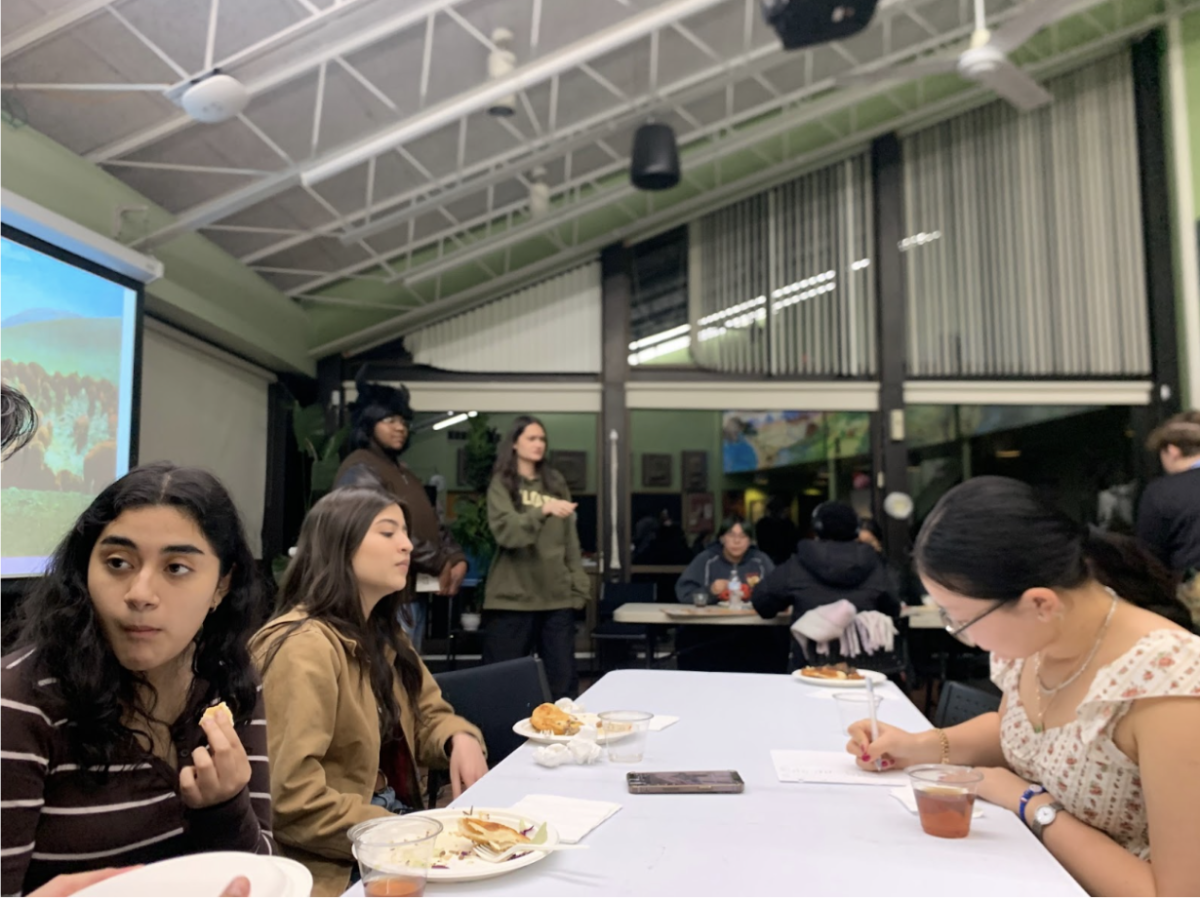
Colgate University celebrated its first Bison Day on Thursday, Feb. 19, with traditional food, Indigenous games and education about the American bison’s cultural significance to Indigenous communities. The Native American Indigenous Student Alliance (NAISA) hosted the event in the Africana, Latin, Asian and Native American (ALANA) Cultural Center, bringing the national November observance to campus for the first time. The inaugural Colgate event featured traditional bison dishes, hand games and stories about the animal’s historical and cultural importance.
Colgate’s first Bison Day celebration comes 13 years after the United States Senate first passed a resolution recognizing National Bison Day in 2013. Officially celebrated on the first Saturday of November to commemorate the bison’s significance to the United States, junior Jai Adams — the president of NAISA — explained why Colgate’s event came in February.
“It was a random decision made during a conversation over dinner with the NAISA core,” Adams said. “We served bison platters during our collaboration with other ALANA cultural groups for Friendsgiving and got a lot of positive reception, so we knew we wanted to do something with bison again. We found the idea of celebrating [Bison Day] so cute that we really pushed for it, even if it was late.”
Kimberly Braveheart, an Indigenous chef from the Oglala Lakota, prepared a hearty spread of bison meatballs, Navajo tacos, frybread, wild rice and salad with maple vinaigrette for the celebration. After attendees were served and settled in, NAISA presented a slideshow about bison.
Adams spoke about bison from multiple perspectives, including their historical geographic range, nutritional value, near extinction and subsequent conservation efforts. Adams also referred to bison as “relatives,” emphasizing their historical and cultural importance to Indigenous communities. The stories Adams shared reflected knowledge passed down through generations in his own Oglala Lakota community.
“Back home in South Dakota, [Bison Day] has probably come up one or more times during events and 10 times more Lakota-spiritual than my presentation about the bison,” Adams said. “But it’s a relatively novel thing [at Colgate], which adds to the charm.”
NAISA shaped the evening into a distinctive celebration. Part of the fun came from a hand game competition, a traditional Indigenous game of skill and psychology. Two teams face off, with one team hiding a small object while the other tries to guess its location. Sophomore Thomas Phoenix explained the strategy behind the traditional game.
“There’s no luck,” Phoenix said. “You have to freak out the other team. But they’re trying to trick you too, so there’s a lot of reverse psychology going on.”
Sophomore Nizak Abdou, the guesser on Phoenix’s team, lamented their early loss in the tournament but stuck around for the rest of the celebration.
“I wish our team hadn’t disbanded so early, because I genuinely think we could’ve won,” Abdou said. “I also really liked the food, obviously, but also the stories that were shared added so much meaning to the experience.”
Abdou found the experience unique and eye-opening.
“I had never had bison before,” Abdou said. “I thought it’d be cool to try. The timing also worked out perfectly — I was fasting, so I had a light iftar beforehand and was ready to devour that bison.”
Adams noted how NAISA was initially worried that people wouldn’t be willing to try the unfamiliar food they offered. Still, every platter was nearly empty within the hour. Students grabbed seconds and thirds as soon as they could.
“It took a lot of trust in the Colgate community to be willing to try dishes they’ve never heard of,” Adams said. “For some, this is their first time ever trying a Navajo taco, wojapi or bison. Seeing the dishes gone faster than we could take pictures was the highlight of NAISA’s event reflections. People had fun while learning and eating, which was the vibe we were going for.”
The celebration was a great success. Upwards of 40 students walked out with new knowledge and appreciation of the American bison. Some requests for future celebrations floated around the room as cleanup got underway.
“I’d think less of it if it were just a day ‘for the bison only,’” Adams said. “We would expand it to other Indigenous cultures around the globe if we continue this. The bison is just one story of a seemingly inconspicuous animal and food source intertwining with Indigenous history and culture. Our furry friend wouldn’t mind sharing the limelight to highlight other significant Indigenous foods and their stories.”