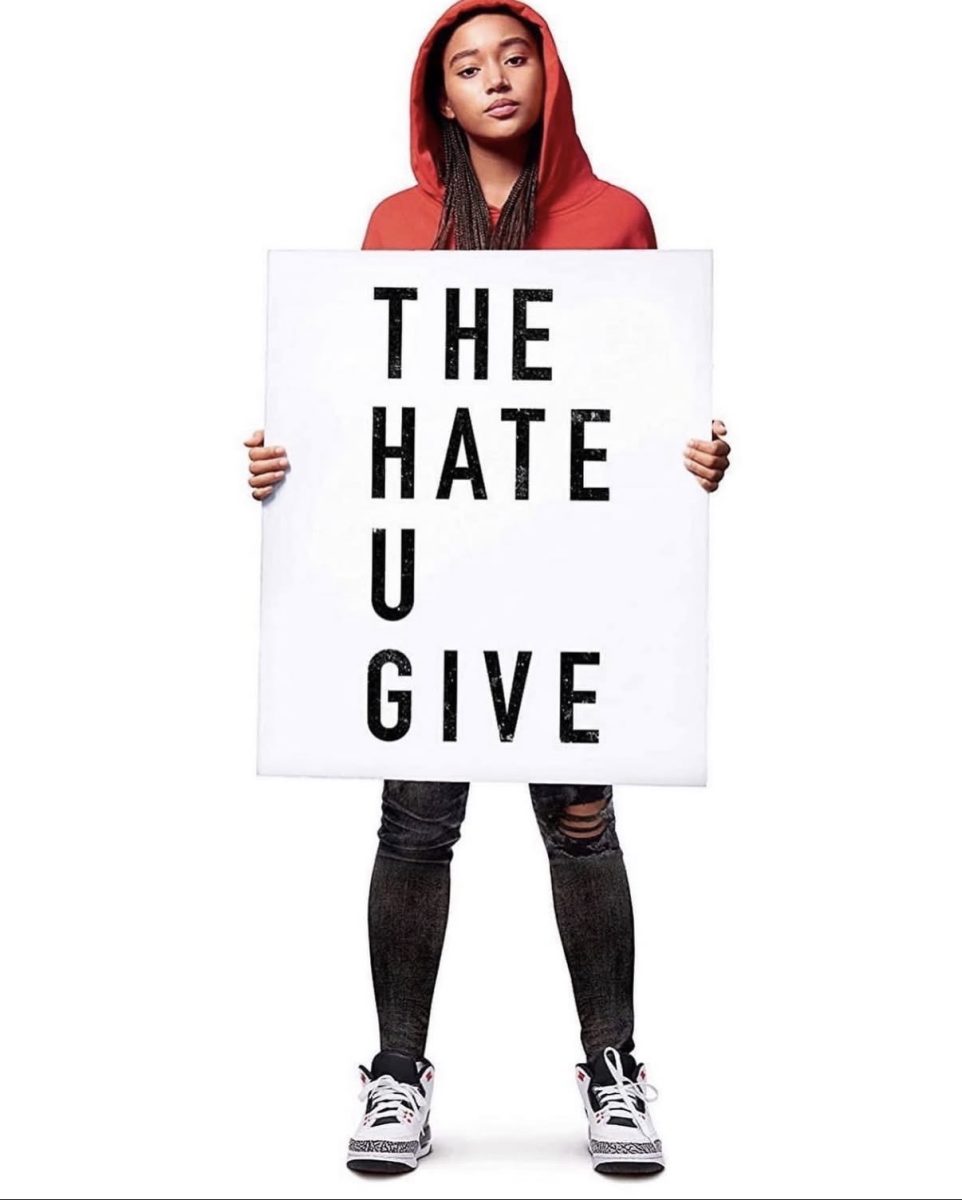
On Feb. 19, Haven and the Black Student Union (BSU) hosted a screening of “The Hate U Give,” creating space for students to engage with themes of race, violence and community healing. The event paired the film with a discussion that encouraged attendees to reflect on how issues depicted on screen resonate within a campus setting.
Released in 2018, “The Hate U Give” follows Starr Carter, a Black teenager navigating life between her predominantly Black neighborhood and her mostly white private school. The story unfolds after Starr witnesses the fatal police shooting of her childhood friend, forcing her to confront questions of identity, systemic injustice and activism. The film explores how personal experiences intersect with broader societal structures, highlighting tensions surrounding race, policing and public perception.
Senior Endré Cattouse, BSU’s social and communications chair and a Haven outreach intern and ambassador, explained that the screening emerged from conversations about the lack of Black History Month programming on campus.
“[During] Black History Month, we don’t really do much,” Cattouse said. “There’s a Social Justice Summit, but even that happens before February starts.”
Cattouse noted that recent institutional changes influenced how students perceive campus engagement with Black History Month.
“Ever since they said DEI was changing or not existent anymore, I feel like Black History Month was like, ‘Oh, we don’t really talk about it,’” Cattouse said.
Beyond broader campus dynamics, Cattouse described a personal connection to the film.
“I wanted us to do something. This was one of the events we brainstormed together with BSU,” Cattouse said. “Specifically, ‘The Hate U Give’ is my favorite movie, and I love the book, which is why I wanted to show it.”
Senior Omogbolahan Gafari emphasized the importance of addressing issues such as police brutality in a campus environment.
“This event is something we need to talk about,” Gafari said. “No one really mentions police brutality because of the state of violence and policing. We see this every time, so I think these are important conversations to have.”
The screening prompted visible reactions from the audience, particularly during scenes depicting police violence, media framing and community protest. Moments of silence and tension reflected the emotional weight of the film’s subject matter. The collective viewing experience shaped the tone of the discussion that followed, as students and organizers alike considered how narratives presented through film can reflect lived realities.
First-year student Zoe Saperstein reflected on the educational value of films like “The Hate U Give.”
“It is important for stories like ‘The Hate U Give’ to be shown on college campuses to highlight the impacts that microaggressions can have on an individual,” Saperstein said. “What can seem like a casual comment can actually feel very discriminatory and harmful.”
Saperstein’s comments aligned with a recurring theme of the discussion: the relationship between campus culture and broader societal realities.
“I feel like at times we may have a bubble around us,” Cattouse said. “Just because we’re in Hamilton … doesn’t mean there aren’t bigger things happening outside of us.”
Students also addressed how conversations about race unfold on campus. While many acknowledged that dialogue exists, several attendees described these discussions as unevenly distributed.
“Conversations are happening by the people who are forced to be in this situation over and over,” Gafari said. “But I don’t think it’s happening enough with people who aren’t in this situation.”
Cattouse echoed this perspective.
“Yes, we have these conversations,” Cattouse said. “But it’s usually amongst me and my friends of color.”
Several attendees suggested that structured events help broaden participation in difficult dialogues by encouraging engagement from students who may not otherwise feel compelled to take part.
“If it’s not affecting you directly, people tend to be like, ‘Well yes, it’s happening, but you’re not as present,’” Cattouse said.
Gafari pointed to uncertainty as a barrier to engagement.
“I think that while there are some people who do want to help, a lot of times they don’t know how,” Gafari said. “Sometimes students are either too comfortable or unsure where to start.”
Students also reflected on the role of campus programming and academic spaces in fostering awareness. Some attendees noted that evolving course offerings, including classes addressing sexual and gender-based violence, signal institutional efforts to engage with complex social issues. However, students emphasized that conversations about race and systemic injustice require sustained attention beyond the classroom.
“I feel like having these types of events also gives you that safe space to become knowledgeable,” Cattouse said.
Gafari underscored the importance of continued dialogue.
“If we stop talking about this, who else will talk about it?” Gafari said.
The screening highlighted how film can serve as a catalyst for campus conversations, prompting students to examine how national issues surrounding race and violence intersect with collegiate spaces. By pairing the screening with an open discussion, Haven and BSU created an environment for reflection, dialogue and engagement.