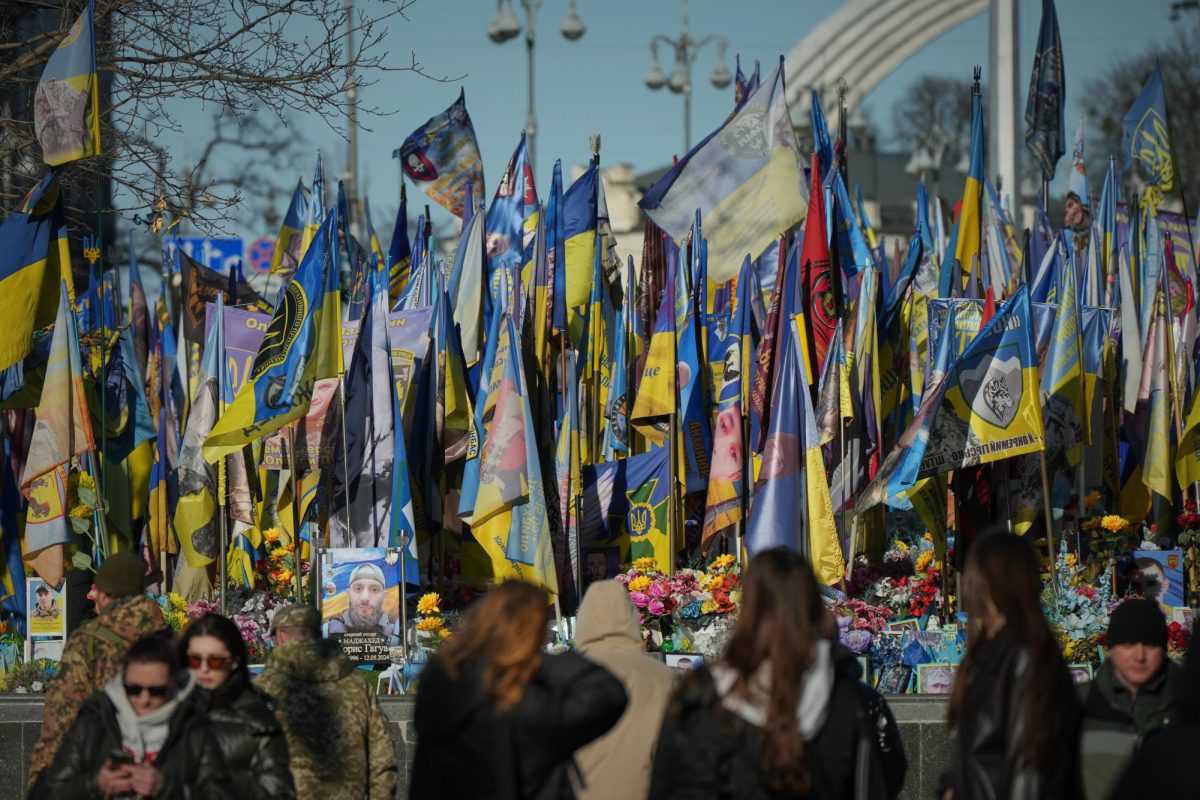
As we enter the fifth year of Russia’s invasion of Ukraine, let’s look at what has changed. It seems that every day, there are new headlines conveying the back-and-forth combat the countries are engaging in, with very few headlines giving definitive answers as to how much the war has evolved. It’s a hard-to-follow progression. What Russia initially predicted would be a short, easy victory became one of the deadliest international conflicts of the 21st century. With governments and think tanks alike speculating as to what’s next, the world is watching anxiously, and it is safe to say there is no clear answer.
What we do know is that Russia began its invasion of Ukraine on Feb. 24, 2022, by sending 200,000 troops to execute a “special military operation” in Ukraine. This was an attempt to gain control over the rest of the country after Russia annexed the former Ukrainian territory of Crimea in 2014. The 2014 invasion was mainly in response to Ukraine’s “Revolution of Dignity” against its pro-Russian president. While Russia believed the 2022 invasion would be a quick win, they were likely the only ones entertaining that notion.
It quickly became clear that Russia had underestimated the difficulty of this invasion. With the help of the West, almost $300 billion in aid has been pledged to Ukraine since the start of the war, portions of which they have used to fight back. The keyword here, however, is “pledged”; not all of this aid has been awarded or provided yet, raising questions of how meaningful those promises were.
Though the exact numbers are kept from the public eye, it is speculated that Russia has suffered over 26,000 monthly casualties since January, with a four-year total of over 1.2 million and fatalities surpassing 300,000. These numbers, as estimated by the Center for Strategic and International Studies, are losses that a major power has not seen since World War II. While the state claims that they average 30,000 newly recruited troops per month, a number that would combat these losses, evidence of deceptive conscription tactics says otherwise.
All of this is not to say that Ukraine is headed toward victory. Russia has been relentless, as shown by the amount of Ukrainian land they have gained since the war began. Over the past four years, Russia has gained control over almost one-fifth of Ukraine’s territory, and there is a big struggle within Ukraine to enforce conscription. Most of this territory was gained through initial surges, and the territory has changed hands multiple times between the Russian and Ukrainian sides.
Ukraine’s biggest goal of late has been to hold off Russian troops as best as possible, inflicting more casualties than are replaceable. While Russia still manages to hold onto around 20 percent of Ukraine’s territory, the 600,000-square-kilometer country has increasingly relied on drone attacks to damage Russian infrastructure and military. Statistics show these efforts may be working, as Russia only managed to take 0.8% of Ukraine in 2025. However, the Kremlin continues to order the bombardment of Ukrainian cities, looking to take any land they can get.
These numbers do not discount the extensive diplomatic work that has been going on behind the scenes. Russia has been stubborn when negotiating with Ukraine and its Western allies. Meanwhile, headlines persist in covering how the European Union (EU) and the United States have both worked closely with Ukraine.
The EU has provided a significant amount of aid to Ukrainians, including energy and relocation assistance for civilians choosing to remain in the war-stricken country, as well as for the refugees opting to leave. As the four-year mark of the war passes, civilians and officials alike remain committed to helping Ukrainians defend their territory.
The United States government has also passed several aid packages for Ukraine, and they remain in consistent contact with Ukrainian President Volodymyr Zelenskyy. The two nations are currently in talks addressing the rebuilding process, as some experts estimate that almost $600 billion will be required to rebuild Ukraine’s economy alone. While the war rages on, the United States and other allies remain committed to ensuring that Ukraine can and will be rebuilt following the devastating war.
Western news headlines covering the war can still be misleading. Some days, there is extensive coverage of Ukraine’s resistance, with many expressing hope for the country that is just fighting to survive. Other days, there are only reports of the Russian efforts to push forward, with no real emphasis placed on notably small percentages of territory that they are actually managing to take.
The inconsistent media coverage, paired with the secrecy and inaccuracy of many details surrounding this war, makes it impossible to know what is to come. Only time will tell how much longer this war will last. With over a million casualties and counting, many are left wondering when (or even if) Russia will back off. Ukraine continues to push for international support while the West reaffirms its condemnation of Russia. Though the war and its implications continue to change and expand, one thing remains certain — the sooner it is over, the better.