The Science and Technology Accelerated Research Scholars (STARS) program connects promising young scholars from underrepresented backgrounds on various campuses across the country. At Colgate University, the Division of Natural Sciences and Mathematics participates by connecting first-year students to STEM research opportunities. A new cohort of Colgate scholars is chosen with each new admitted class beginning in 2022.
First-year David Fermin is one of this year’s selected STAR Scholars. He is interested in studying biology and potentially pursuing a PhD and he mentioned that the program has allowed him to work in a research lab much earlier than usual in his college career. Fermin has worked under the guidance of Professor of Biology Engda Hagos. He credits him as a mentor who pushed him to engage with scientific inquiry at a deeper level.
“Engaging with these deeper questions has transformed my perspective,” Fermin said. “What began as an interest in acquiring research skills has evolved into a genuine passion for asking meaningful, impactful scientific questions.”
Fermin has been pursuing biological research with Hagos.
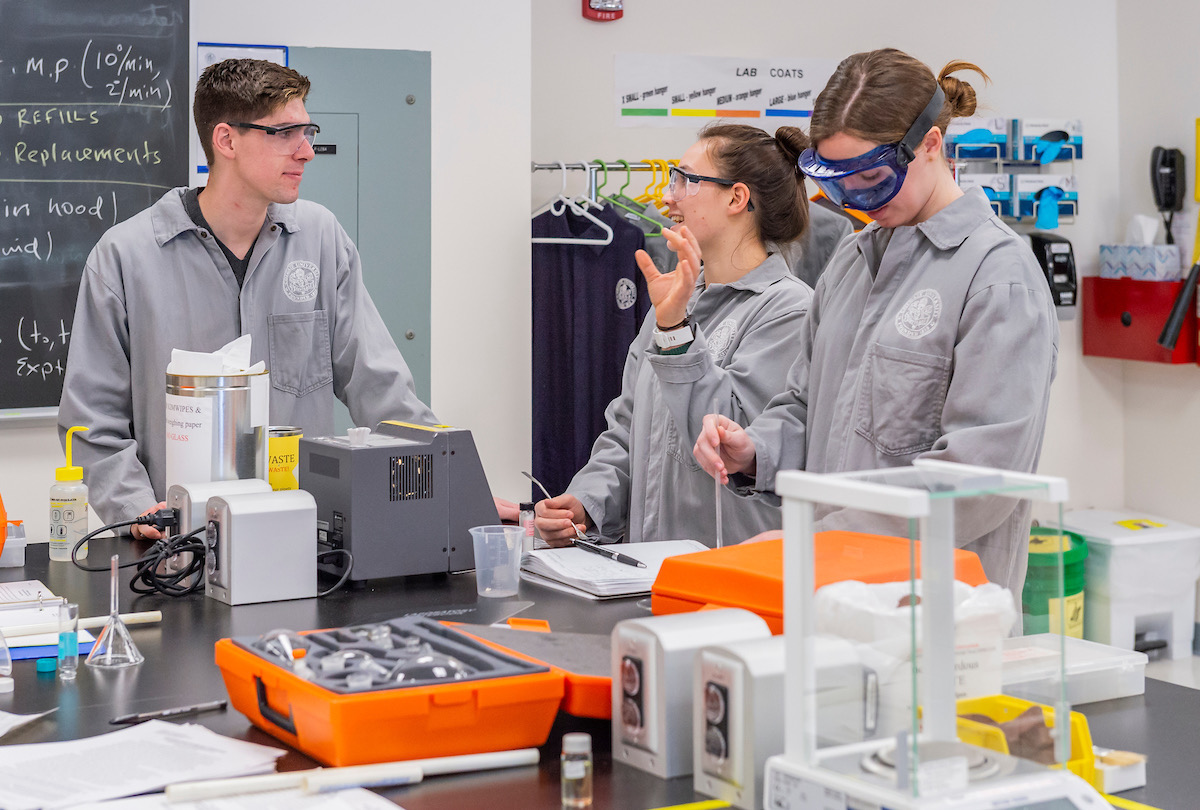
“Thus far, I have been tasked with understanding the relationship between cancer and metabolism … involving the transcription factor KLF4. My work has focused on maintaining cell cultures and conducting experiments to analyze protein expression in human colorectal cancer cell lines,” Fermin said. “Using laboratory techniques such as drug treatments and western blot analysis, I have explored how metabolic pathways are influenced in cancer cells drug-treated to induce KLF4 expression.”
Reflecting upon the experience, Fermin mentioned that he believes the program will give him a leg up in acquiring the skills to pursue graduate studies.
“I am confident that this experience has provided me with a strong intellectual foundation to approach scientific questions,” Fermin said. “The ability to analyze data, create meaningful research questions and persist through unexpected outcomes will continue to guide me as I advance in my academic career and work toward becoming a researcher in the field of biology.”
First-year Nia McKenzie is an intended physics major, with potential minors in math and economics. She said that the program has allowed her to experience what research is all about, and mentioned that her personal interests in mathematics have overlapped with her other academic interests through research.
McKenzie is currently pursuing faculty-led research with Professor of Mathematics Gabriel Sosa Castillo.
“Our main focus is on the Kelly-Ulam conjecture, a six-decade-long unanswered question about reconstructable graphs and monomial orders. Over the course of the two semesters, we have to learn how to do proofs, understand relations, learn about graphs called trees and other topics pertaining to graph theory,” McKenzie said.
McKenzie noted that the program opened up new possibilities in the field of mathematics as a personal interest of hers.
“It is something that I find very intriguing to learn about,” McKenzie said. “I would definitely like to go on to do further research in graph theory and other mathematical topics.”
Junior Roma Lerner, pursuing a double major in environmental studies and film and media studies, shared that the impact of STARS goes beyond academic research.
“Working with STARS allowed me to create new friendships and look into new fields of interest,” Lerner said. “I was able to gain thoughtful, hands-on experience that pushed me outside of my comfort zone.”
The STARS program is relatively new at Colgate. However, it has quickly become an initiative that fosters intellectual curiosity and expands access to STEM, offering students valuable experience that will serve them well in their future scientific endeavors.