


Correction: March 24, 2026 — This article has been updated to correct two factual errors. A previous version stated that by 8 a.m. on the second day of the housing lottery, no townhouses remained. In fact, all eight-person townhouses were selected on the first day of selection, while 16-person townhouses remained available into the second day. A previous version also incorrectly described the impact of renovations on the Gamma Phi Beta and Beta Theta Pi chapter houses on townhouse availability. The Maroon-News regrets the errors.
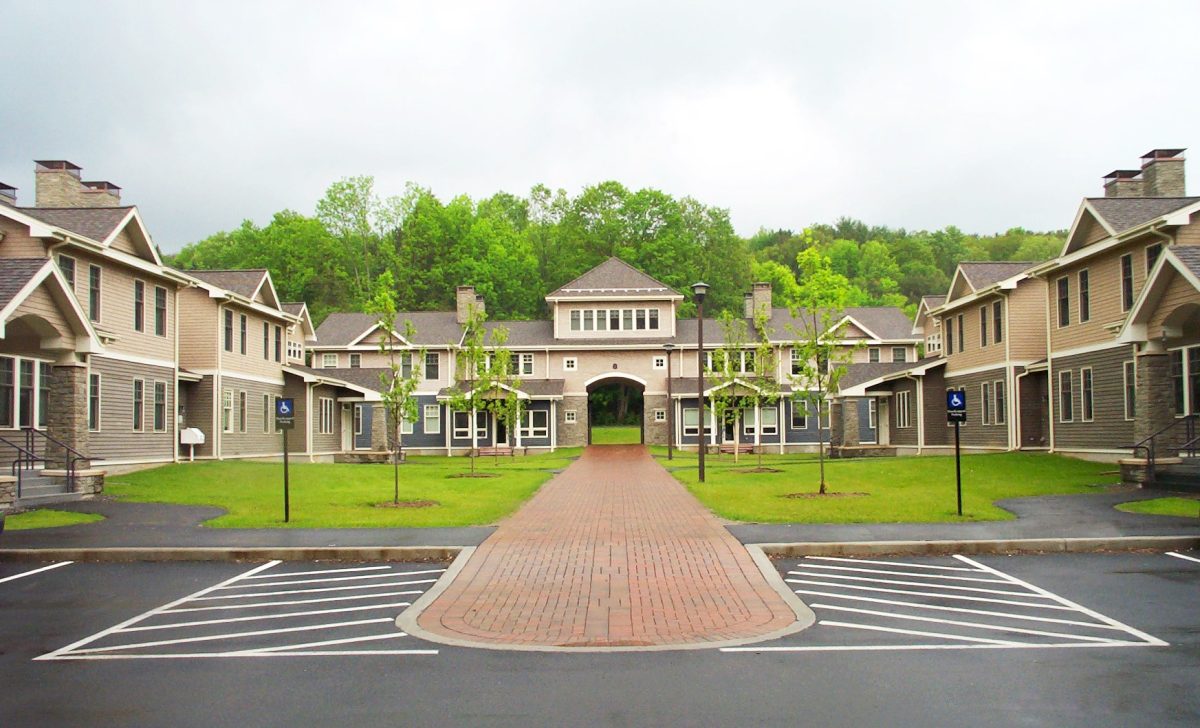
Colgate University’s 2026-27 housing selection process for townhouses sparked confusion, last-minute alliances and allegations of students paying thousands of dollars for better lottery time slots, leaving many scrambling for alternatives. Students described a chaotic process in which the coveted townhouses were taken early in the selection period.
Despite the turbulence reportedly experienced by students, the Office of Residential Life (ResLife) did not view this year’s process as unusual. Director of Residential Life Mo Muckinhaupt noted an increase in interests for townhouses this year, but no significant changes to the junior and senior selection process.
All eight-person townhouses were selected on the first day of the housing lottery — a notably faster pace than last year, when the final eight-person unit was not claimed until 4:10 p.m. on the second day, according to ResLife. Sixteen-person townhouses remained available into the second day. Because seniors are given first-day preference in housing selection, a group of juniors living with one or more seniors has access to popular housing types before groups without seniors.
The townhouse scarcity was further exacerbated by planned renovations on the Gamma Phi Beta chapter house at 72 Broad St., which rendered the house temporarily uninhabitable. ResLife pre-placed Gamma Phi Beta members in a 16-person townhouse and 118 Broad St. to ensure continuity for the chapter, effectively removing that 16-person townhouse unit from the general selection pool.
Sophomore Fabiola Theodoro said her housing group initially planned to rely on a student who had agreed to “ghost” for them in order for them to secure a townhouse. In Colgate housing slang, ghosting refers to a practice in which a student selects a room through the official ResLife housing lottery but does not actually live in the assigned space, often choosing to live off campus instead. The student maintains the housing assignment to secure the room for others, and in exchange, the actual residents split the cost of the ghost student’s University housing fees, which typically amount to around $10,038 per year.
“After the number of townhouses that were left came out, we quickly realized that we needed to find a way to get an earlier time slot, otherwise we wouldn’t get a townhouse,” Theodoro said. “We were able to find someone who was willing to ‘ghost’ for us, so we thought we were in the clear.”
But the plan fell apart at the last minute.
“During all of that time, something happened and our ‘ghost’ ended up giving their time to another group,” Theodoro said. “This meant that we only had an hour or so to figure out a backup plan of where we could possibly live.”
Theodoro said the experience left her group questioning the system.
“I think the whole housing situation is a disaster every year, so it makes me wonder if there is anything ResLife could do to change it,” Theodoro said. “People will always find a way to get what they want, whether that be paying people or finding others to ghost for them.”
Multiple students told The Maroon-News that housing groups were offering thousands of dollars in exchange for earlier housing selection slots. In one case, two planned 16-person townhouse groups reportedly competed in a bidding war for a sophomore holding a desirable 4:05 p.m. selection time, The Maroon-News learned — although rising juniors have historically dominated townhouse occupancy, every townhouse was filled within five minutes during rising junior selection day this year. Students reported that offers exceeding $2,000 were made for the time slot, raising questions about whether the system’s intended randomness can be bypassed by informal agreements.
Students cited contradictory information from ResLife as another source of frustration. Despite initial encouragement from ResLife to form housing groups prior to lottery times being released, students told The Maroon-News that when calling the office for advice during the process, administrators told them it was wisest to form groups after selection times were released.
The controversy also spilled into the Colgate University Parents Facebook group, where families expressed frustration and concern about the housing process.
“This is corruption. What is the Colgate administration doing about it?” Blanche Tax wrote. “Students who play by the rules pay the price, [but] those who use money circumvent the system.”
Parents wrote that the issue reflects broader dissatisfaction with the University’s housing system, and expressed their opinions that the University should intervene in the process.
“This is a really big issue,” Jill Ostrem wrote. “I’ve been so disappointed in Colgate housing every year.”
Katie Child, Associate Director for Dean of the College and Parent Communications and the Facebook group’s administrator, responded that concerns had been forwarded to University officials.
“I’ve shared your thoughtful feedback and concerns with the appropriate departments, and I’ve made sure the right teams are aware,” Child wrote.
Muckinhaupt acknowledged that rumors of payments had reached her office.
“We have heard reports of individuals this year trying to manipulate a system that is designed to be equitable and fair,” Muckinhaupt said. “We take these concerns seriously, and we are evaluating adjustments to the process to ensure that all students have access to Colgate’s housing inventory. We want to preserve choice and community while ensuring fairness and integrity in the process.”
For some housing groups, successful selection meant improvisation. One eight-person group of sophomores from the Kappa Kappa Gamma sorority, holding a coveted 4:03 p.m. housing selection slot, discovered on the morning of the lottery that no eight-person townhouses remained. The group ultimately joined forces with an eight-person group of sophomores from the Beta Theta Pi fraternity to secure a 16-person townhouse together.
Sophomore Aynsley Zamore said the alliance formed quickly once the group realized its options were limited.
“I had a 4:03 time slot, but it still wasn’t good enough to get an eight-person toho,” Zamore said. “We woke up the morning of and freaked out that there were none left. We knew [Beta Theta Pi] wanted an eight-person one and decided to join forces. We didn’t form the toho — the toho came to us, honestly. An awesome alliance.”
Sophomore Colton Dowling, another resident in this unusual mixed-gender townhouse, described his experience of the unpredictable lottery atmosphere.
“I mean, it was all madness … and I guess we just found a way to make it work,” Dowling said.
Speaking on behalf of ResLife, Muckinhaupt gave a statement addressing students who found the process stressful or unfair.
“The Office of Residential Life is committed to reviewing and improving housing selection, to reducing anxiety or confusion with the process and also protecting student autonomy and choice in the process,” Muckinhaupt said. “This year, we also worked to shorten the selection timeline and to have it completed by spring recess, so students could focus on other priorities in the second half of the semester.”
Despite frustration surrounding the process, many students ultimately secured their desired housing through last-minute collaborations or backup plans. Still, allegations of paid time-slot swaps and ghosting left some students and their families questioning whether the housing selection system operated as intended.
Muckinhaupt encouraged community members to send feedback to [email protected].



Erin Randall-Clark • Mar 22, 2026 at 2:11 pm
Spot on! My son who is a current Colgate student experienced exactly this and more.