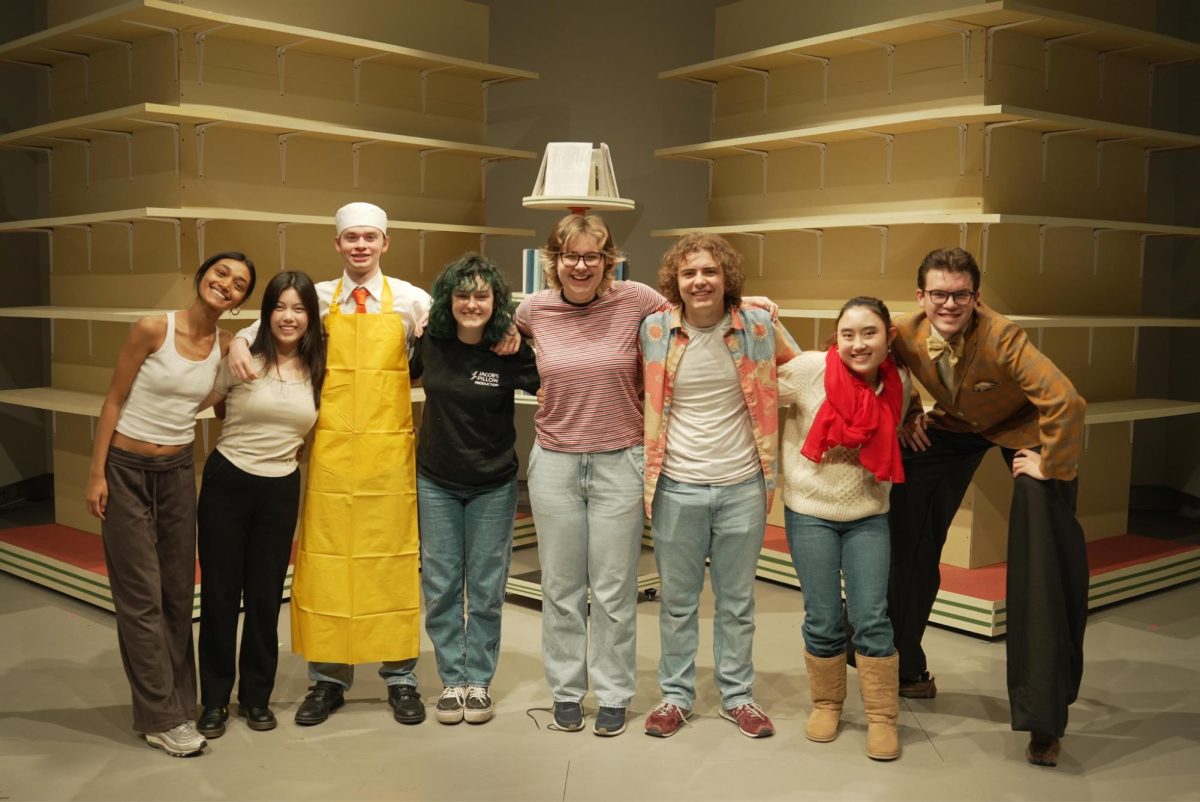
Students, faculty and staff gathered to celebrate sustainability leadership at Colgate University during the annual Environmental Studies (ENST) & Oak Award Ceremony on Friday, April 17. Held as part of the “13 Days of Green” leading up to Earth Day, the event highlighted a wide range of efforts from institutional initiatives to student-led projects, demonstrating the many ways sustainability is taking shape across campus.
The ceremony opened with remarks from Anne Perring, associate professor of chemistry and chair of the Sustainability Council, who framed sustainability as both a long-term challenge and an evolving practice. Reflecting on Colgate’s history, she emphasized that sustainability is not a fixed goal, but an ongoing process shaped by changing environmental, technological and social conditions.
“We’re at an inflection point,” Perring said. “We have to celebrate getting to carbon neutrality in 2019, but we also have to figure out the path forward.”
Perring stressed that sustainability must become embedded in everyday decision-making at the institutional level, rather than remaining a standalone initiative. She also highlighted the importance of recognizing work that often goes unnoticed.
“A lot of the most important projects are kind of invisible if you aren’t told about them,” Perring said. “That’s why it’s important to celebrate them publicly.”
The Oak Awards, which have been presented annually since 2011, honor members of the Colgate community who contribute to sustainability through leadership, innovation and service. This year’s recipients reflected the diversity of sustainability work on campus.
Among the honorees was boiler operator Paul DuVall, who works in Colgate Facilities. DuVall was recognized for his work in managing the University’s wood-chip boiler system. Through both his technical expertise and educational outreach efforts, DuVall has helped reduce reliance on fossil fuels while making complex infrastructure understandable to students and visitors.
The Longyear Museum of Anthropology was also honored for its sustainability-focused exhibitions and practices. Rebecca Mendelsohn, co-director of University Museums, curator of the Longyear Museum of Anthropology and research affiliate and instructor in sociology and anthropology, emphasized the collaborative nature of their work.
“It is a really nice acknowledgment of the work that my colleagues in University Museums have been doing for some time,” Mendelsohn said. “The current exhibition, at least, we certainly could not have done without a lot of help from a lot of collaborators around campus.”
Mendelsohn highlighted partnerships with programs such as Entrepreneurship and Innovation and the Center for Women’s Studies, noting that sustainability at the museum extends beyond exhibits to include behind-the-scenes decisions about materials and waste.
“That could be program planning, but it can also be behind-the-scenes installation of our exhibitions and what we do with the waste after the fact,” Mendelsohn said.
Other Oak Award recipients included The Salvagers, a student organization focused on waste reduction and reuse, and Students for Environmental Action, recognized for its advocacy and education efforts around sustainability. The ceremony also specifically recognized individuals with Oak Awards, including senior Addisyn Donfris, who has worked to integrate sustainability into athletics, sophomore Tejas Prakash, who developed recycling initiatives within his organization and sophomore Arden Williamson, honored for leadership within the Student Sustainability Council.
In addition to the Oak Awards, the ceremony recognized students in the ENST program for achievements in research, community service and environmental justice.
Seniors Abrielle Silva and Katrina Wright received awards for environmental studies research, with projects ranging from analyses of plastic bag policies to the use of artificial intelligence in environmental monitoring. Their work reflects the growing role of interdisciplinary approaches in addressing environmental challenges.
For community service, senior Callie Dahler was recognized for her work with the campus garden, where she has led volunteer groups and organized events to engage the Colgate community. For Dahler, the award was both meaningful and motivating.
“It’s nice to be recognized when you’re doing the work,” Dahler said. “I’ve been involved in the garden since I was a freshman.”
Dahler emphasized that her favorite part of the experience has been working with others and building community.
“Probably the volunteers and just getting people excited about the garden,” Dahler said.
She hopes her efforts will have a lasting impact, encouraging students to stay involved even after she graduates.
“I hope that people continue to be interested in the garden and volunteering,” she said. “Even going to the garden to de-stress – that’s really important.”
Senior Daquan Hurt was also recognized for community service, particularly for his work connecting sustainability with environmental justice and broader social issues.
The awards for commitment to environmental justice were presented to seniors Lulu Manco-Stenz and Leigha Schultze, both of whom have combined academic research with community engagement. Their work highlights the importance of understanding how environmental policies affect different communities in different ways.
Throughout the ceremony, a recurring theme was the importance of diverse approaches to sustainability. Perring noted that meaningful solutions often emerge from individuals working within their own areas of expertise.
“Everyone is going to be the best person to come up with ideas for implementing solutions in their local environment,” Perring said. “If you’re on an athletics team, you have a better idea for how to make that more sustainable than I do.”
This emphasis on localized, community-driven action reflects a broader shift in how sustainability is understood at Colgate. Rather than focusing solely on large-scale goals, the university is increasingly supporting a wide range of initiatives that collectively contribute to long-term change.
At the same time, speakers acknowledged that significant challenges remain. Perring pointed to the uncertainty of future climate conditions as a major obstacle, noting that it can be difficult to plan for impacts that are not yet fully understood.
“We live on a changing planet,” Perring said. “There are always things to work on.”
As Perring understood it, the goal of Colgate’s sustainability programming was not to provide definitive answers, but to equip students with the knowledge to navigate an uncertain future.
“I hope we’ve opened your eyes to the ways that all the things are interconnected, and given you some tools so that you can answer the new questions you’ll be facing,” Perring said.